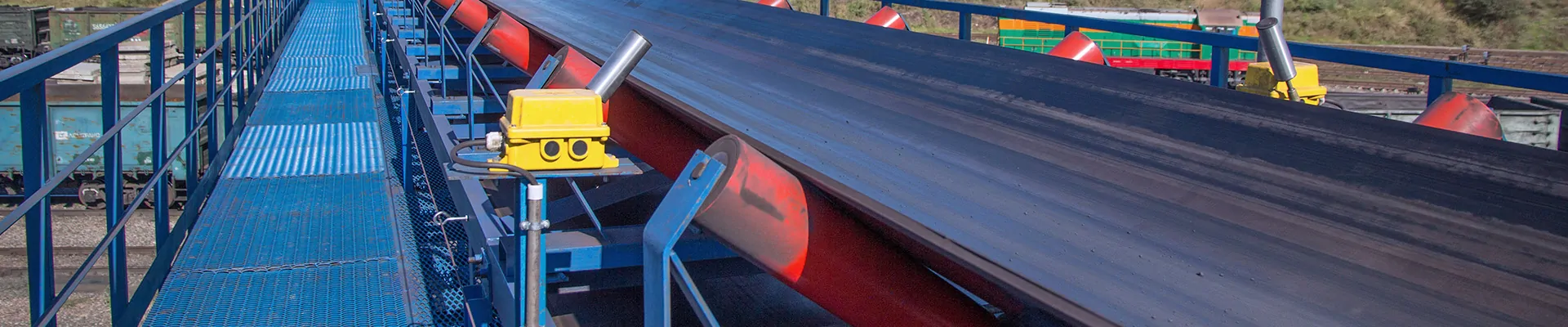
Conveyor Belt Scrapers: Precision Cleaning for Maximum Belt Life & Efficiency
Conveyor Belt Scraper is a focused cleaning device that uses precisely engineered blades to scrape residual and adhesive materials from the conveyor belt surface. Installed at critical points—primarily at the head pulley—these scrapers are the first line of defense against carryback, preventing material buildup on idlers, pulleys, and the return belt, which leads to costly wear, misalignment, and housekeeping issues.
Core Advantages:
Targeted Material Removal: Efficiently strips wet, sticky, or fine materials from the belt surface.
Protects Conveyor Components: Prevents abrasive buildup that accelerates wear on idlers and pulleys.
Maintains System Hygiene: Reduces spillage and material accumulation for a safer, cleaner site.
Engineered Blade Options: Blades available in polyurethane, tungsten carbide, or ceramic for specific materials.
Adjustable Tension Systems: Spring or torsion-based systems maintain optimal blade pressure.
Ideal as primary or secondary cleaners in cement plants, mining, aggregate processing, and industries handling clay, coal, or wet materials.
Types of Conveyor Belt Scrapers
Primary (Pre-Cleaner) Scrapers
Installed at the head pulley discharge point to remove the bulk of carryback material before the belt returns.
| Feature |
Description |
| Location |
Head pulley, at the point where material is discharged |
| Blade Material |
Tungsten carbide, polyurethane, or ceramic |
| Mounting |
Fixed position with tensioning mechanism (spring, rubber, or air) |
| Cleaning Efficiency |
70-85% of carryback removal |
| Typical Application |
Aggregates, mining, coal handling |
Secondary (Post-Cleaner) Scrapers
Installed downstream of the primary scraper on the return side of the belt to remove residual material left by the primary scraper.
| Feature |
Description |
| Location |
Return side of the belt, after the head pulley |
| Blade Material |
Polyurethane, rubber, or tungsten carbide |
| Mounting |
Flexible; conforms to belt surface irregularities |
| Cleaning Efficiency |
90-95%+ total carryback removal (combined with primary) |
| Typical Application |
All conveyors requiring clean return belts |
Additional Scraper Types
| Type |
Description |
Application |
| Reversing Belt Scraper |
Dual-blade design for belts that run in both directions |
Reversible conveyors, shuttles |
| V-Plow / Diagonal Plow |
Installed on return belt to remove material before tail pulley |
Prevents material entrapment between belt and tail pulley |
| Razor / Fine Cleaning Scraper |
Ultra-thin blade for removing fine, sticky materials |
Cement, fly ash, fine powders |
| Rubber Wiper |
Soft rubber blade for light-duty cleaning |
Packaging, light industrial |
Key Features & Benefits
| Feature |
Benefit |
| High-Quality Blade Materials |
Tungsten carbide, polyurethane, and ceramic blades for long wear life |
| Automatic Tensioning |
Spring, rubber torsion, or air tension maintains constant blade-to-belt pressure |
| Easy Maintenance |
Quick-change blade systems minimize downtime |
| Self-Adjusting Design |
Compensates for blade wear and belt irregularities |
| Non-Damaging to Belt |
Properly designed blades clean without cutting or abrading belt cover |
| Corrosion Protection |
Galvanized or stainless steel mounting hardware |
| Flame Retardant Options |
Available for underground mining applications |
| Custom Blade Profiles |
Straight, scalloped, or segmented blades for different materials |
Blade Material Comparison
| Material |
Hardness |
Wear Life |
Best Application |
| Tungsten Carbide |
Very High |
12-24 months |
Abrasive materials (ore, slag, cement) |
| Polyurethane |
Medium |
6-12 months |
Non-abrasive, sticky materials (clay, wet sand) |
| Ceramic |
Very High |
12-24 months |
High-temperature applications |
| Rubber |
Low |
3-6 months |
Light-duty, packaging |
| UHMW-PE |
Medium |
6-12 months |
Food-grade, non-marking |
Tensioning Mechanism Comparison
| Type |
How It Works |
Advantages |
Best Application |
| Spring Tension |
Coil spring provides constant pressure |
Simple, reliable, low cost |
General industrial |
| Rubber Torsion |
Rubber element twists to apply pressure |
Absorbs shock, maintenance-free |
Heavy-duty, mining |
| Air / Pneumatic |
Compressed air cylinder applies pressure |
Adjustable, consistent |
Variable load conditions |
| Gravity |
Counterweight applies pressure via cable |
Simple, no springs to fatigue |
Stationary installations |
| Fixed (Manual) |
Bolted in position |
Lowest cost |
Light-duty, occasional use |
Technical Specifications
| Parameter |
Primary Scraper (Carbide) |
Secondary Scraper (PU) |
| Belt Width Range |
400 – 2400 mm (16" – 96") |
400 – 2400 mm (16" – 96") |
| Blade Material |
Tungsten carbide inserts |
Polyurethane (90-95 Shore A) |
| Blade Width |
100 – 200 mm (4" – 8") per segment |
Full belt width or segmented |
| Tensioning Type |
Spring, rubber torsion, or air |
Spring or rubber torsion |
| Pressure at Blade Tip |
0.5 – 2.0 kg/cm |
0.1 – 0.5 kg/cm |
| Maximum Belt Speed |
5.0 m/s (1000 fpm) |
4.0 m/s (800 fpm) |
| Temperature Range |
-30°C to +80°C |
-20°C to +60°C |
| Mounting Hardware |
Galvanized or stainless steel |
Galvanized or stainless steel |
| Blade Change Time |
5-10 minutes per blade |
2-5 minutes per blade |
Component Breakdown – Primary Scraper
| Component |
Material / Specification |
Function |
| Main Frame |
Steel channel or tube |
Supports entire scraper assembly |
| Mounting Bracket |
Steel plate with bolt holes |
Attaches to conveyor structure |
| Tensioning Unit |
Spring, rubber torsion, or air cylinder |
Maintains blade-to-belt contact |
| Blade Holder |
Steel or aluminum extrusion |
Holds blade segments |
| Blade Segment |
Tungsten carbide on steel backing |
Contact surface; removes material |
| Pivot Arm |
Steel |
Allows blade to follow belt contour |
| Adjustment Bolts |
Galvanized steel |
Fine-tune blade position |
| Wear Indicator |
Visual scale |
Indicates when blade replacement is needed |
Installation Locations
| Position |
Scraper Type |
Purpose |
| Head Pulley (Discharge) |
Primary scraper |
Removes 70-85% of carryback |
| Return Belt (after head pulley) |
Secondary scraper |
Removes remaining fine material |
| Before Tail Pulley |
V-Plow / Diagonal plow |
Prevents material entrapment |
| Magnet / Metal Detector Area |
Rubber wiper |
Removes light surface material |
| Reversing Conveyor |
Dual-direction scraper |
Cleans in both belt directions |
Applications
| Industry |
Typical Use |
| Mining |
Ore, coal, potash, copper concentrate |
| Aggregates & Quarrying |
Sand, gravel, crushed stone, limestone |
| Cement |
Clinker, raw meal, fly ash |
| Power Generation |
Coal handling, ash handling |
| Port & Terminal |
Ship loading/unloading conveyors |
| Food Processing |
Grain, sugar, salt, pet food |
| Chemical & Fertilizer |
Fertilizer, plastic pellets, chemicals |
| Recycling & Waste |
MSW, shredded material, compost |
Selection Checklist
When ordering a conveyor belt scraper, please specify:
Belt width (mm or inches)
Belt speed (m/s or fpm)
Material type (abrasiveness, stickiness, lump size)
Moisture content (%)
Operating temperature (°C or °F)
Scraper type (primary, secondary, or both)
Blade material (tungsten carbide, polyurethane, ceramic)
Tensioning type (spring, rubber torsion, air)
Mounting position (head pulley, return belt, or tail area)
Reversing belt requirement (yes/no)
Flame retardant requirement (yes/no)
Quality Standards
All conveyor belt scrapers are manufactured to:
ISO 9001:2015 – Quality management system
CE Marking (available upon request)
ATEX / MSHA flame retardant certification (mining models)
Each scraper undergoes:
Blade hardness and wear resistance testing
Tensioning mechanism function test
Frame dimensional inspection
Corrosion protection verification (coating thickness)
Conveyor belt scraper, belt cleaner, conveyor belt cleaner, primary scraper, secondary scraper, tungsten carbide scraper, polyurethane scraper, belt cleaning system, head pulley scraper, return belt scraper, V-plow, diagonal plow, belt carryback removal, self-adjusting belt scraper, spring tension scraper, air tension scraper, reversible belt scraper.