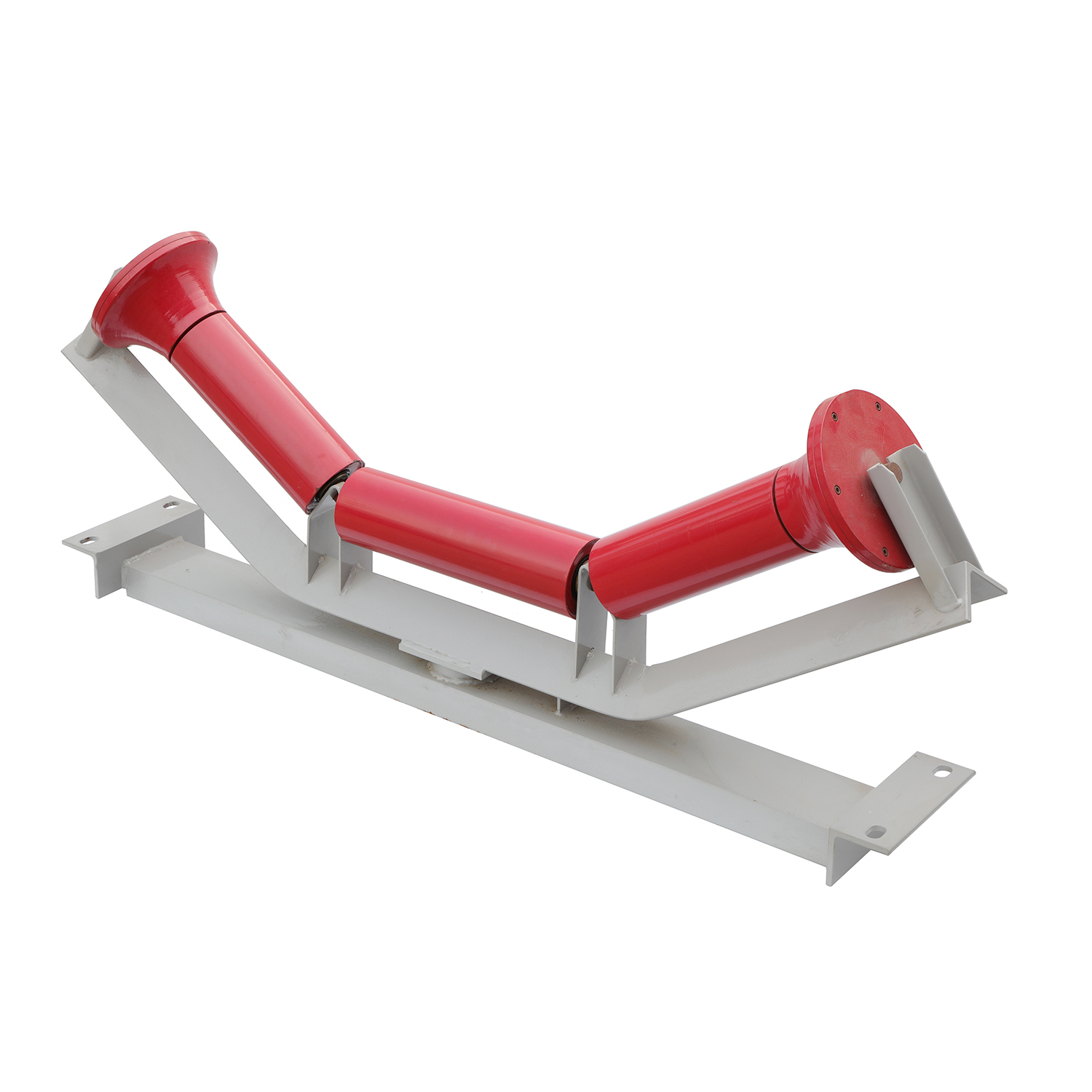
Conveyor systems serve as the backbone of modern industrial logistics, mining, and manufacturing sectors. At the heart of these massive mechanical networks lies the conveyor idler roller, a critical component designed to support the belt and the transported material while reducing friction and power consumption. The efficiency of a material handling system often depends on the precision and durability of these rollers, which must withstand harsh environmental conditions, heavy loads, and continuous operation. Selecting the appropriate conveyor idler roller is not merely a matter of maintenance but a strategic decision that affects the entire lifecycle of the conveyor belt.
A conveyor idler roller is a cylindrical mechanical component used to support the conveyor belt and the bulk material being transported, ensuring smooth movement and preventing the belt from sagging or stretching under heavy loads. These rollers are essential for maintaining belt alignment and minimizing the energy required to move materials across long distances. By using a high-quality conveyor idler roller, industries can significantly reduce mechanical wear and tear on the conveyor belt roller system.
In the following sections, we will explore the fundamental mechanics of idler technology and the diverse range of specialized rollers available in the market today. From heavy-duty mining applications to high-speed packaging lines, understanding the nuances of different roller designs is vital for any facility manager or engineer. This guide provides a detailed analysis of the technical specifications, material options, and selection criteria necessary to optimize your conveyor system’s performance and longevity.
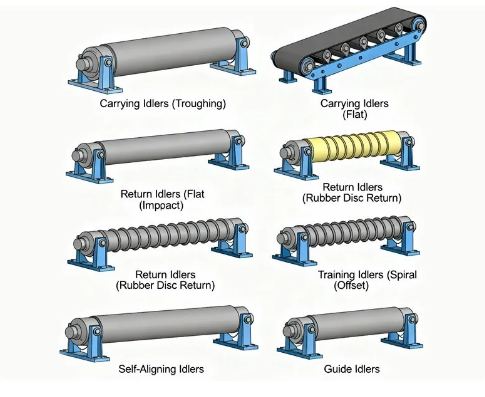
Table of Contents
What is an Idler Roller?
A conveyor idler roller is a fundamental structural element of a conveyor system consisting of a central shaft, bearings, seals, and an outer shell that rotates to provide a low-friction surface for the conveyor belt roller to travel upon. It functions as the primary support mechanism for both the carrying side and the return side of the belt, ensuring that the tension remains consistent and the material remains centered during transit. The conveyor idler roller is designed to absorb the impact of loading and distribute weight evenly across the conveyor framework.
The internal architecture of a conveyor idler roller is a masterpiece of precision engineering. The core of the roller is typically a high-grade steel shaft that must be perfectly straight to prevent vibration. Surrounding this shaft are specialized ball or roller bearings, which are the most critical components for ensuring low rolling resistance. To protect these bearings from the dust, moisture, and debris common in industrial environments, a sophisticated sealing system—often a multi-labyrinth seal—is employed. This ensures that the conveyor idler roller can operate for thousands of hours without requiring frequent lubrication or maintenance.
Beyond basic support, the conveyor idler roller plays a pivotal role in the thermodynamics and energy efficiency of the conveyor system. When a roller has high rolling resistance, the motor driving the belt must work harder, leading to increased electricity costs and potential overheating. A well-manufactured conveyor belt roller minimizes this "indentation rolling resistance," allowing the belt to glide effortlessly. This is particularly important in long-distance overland conveyors where thousands of rollers are used; even a small improvement in the efficiency of a single conveyor idler roller can result in massive energy savings across the entire installation.
Furthermore, the shell or "can" of the conveyor idler roller can be made from various materials depending on the application. While carbon steel is the industry standard for its strength and cost-effectiveness, stainless steel is used for food-grade or corrosive environments, and polymer or HDPE rollers are gaining popularity for their lightweight and corrosion-resistant properties. The thickness of the shell is also a critical factor, as it must resist the abrasive wear caused by the constant contact with the underside of the conveyor belt roller.
| Feature | Description | Importance |
| Shell Material | Steel, HDPE, or Stainless Steel | Determines durability and weight |
| Bearing Type | Deep groove ball bearings | Ensures smooth rotation and load capacity |
| Sealing System | Labyrinth or contact seals | Protects internals from contamination |
| Shaft Diameter | Varies by load (e.g., 20mm to 50mm) | Prevents shaft deflection under load |
Common Types of Idler Rollers
The industry utilizes a wide variety of conveyor idler roller types, including carrying idlers, return idlers, impact idlers, and training idlers, each specifically engineered to handle unique stresses at different points along the conveyor path. Carrying idlers are typically arranged in sets to create a trough shape for bulk materials, while impact rollers feature rubber rings to absorb the shock at loading zones. The selection of a specific conveyor belt roller type is determined by its position on the frame and the physical characteristics of the material being moved.
Carrying and Troughing Idlers
Carrying idlers are the most common type of conveyor idler roller found on the top side of the conveyor frame. They are usually configured in "sets" of three or five rollers. The center roller is horizontal, while the wing rollers are angled (typically at 20, 35, or 45 degrees) to form a trough. This troughing action increases the carrying capacity of the conveyor belt roller and prevents material spillage. High-precision troughing idlers ensure that the belt remains stable even when carrying heavy ores or aggregates.
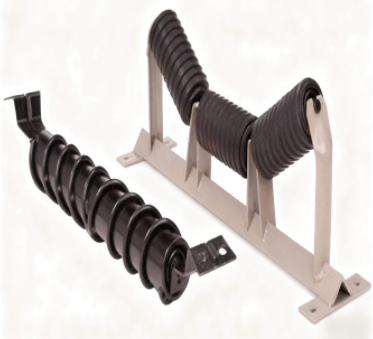
Located at the points where material is dropped onto the belt, the impact conveyor idler roller is designed to take a beating. These rollers are covered with thick, resilient rubber discs or rings that cushion the blow of falling rocks or heavy industrial parts. Without these specialized conveyor belt roller units, the sheer force of the material could puncture the belt or damage the steel structure of the conveyor. The rubber rings provide a damping effect, extending the life of both the belt and the roller bearings.
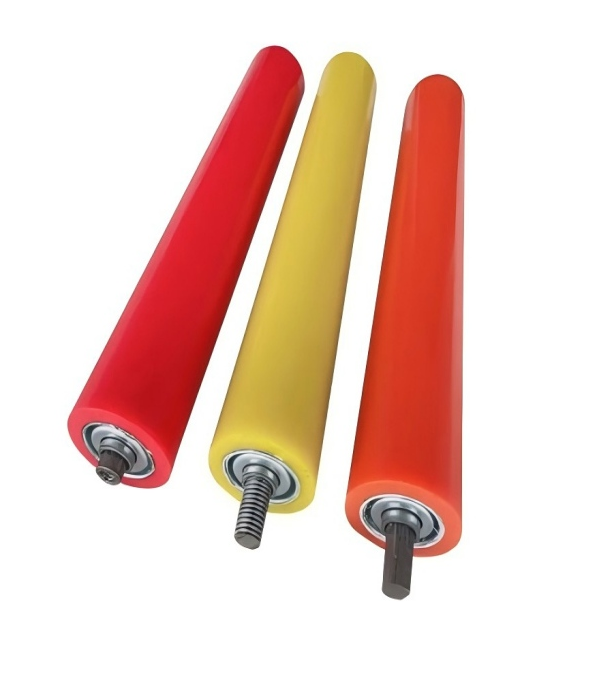
Once the belt has discharged its load, it travels back to the start on the underside of the frame. The return conveyor idler roller supports the empty belt during this journey. Since the return side is often exposed to "carry-back" (leftover material sticking to the belt), return rollers are sometimes fitted with rubber discs or spirals to help shed debris. V-return idlers, which consist of two rollers in a V-shape, are often used on long conveyors to provide better tracking for the return conveyor belt roller.
Training and Self-Aligning Idlers
Belt misalignment is a leading cause of conveyor downtime. Training conveyor idler roller sets are designed to automatically pivot and steer the belt back to the center if it begins to drift. These units utilize a sensing mechanism or a central pivot that reacts to the lateral movement of the conveyor belt roller. By installing training idlers at strategic intervals, operators can prevent edge damage and ensure the system runs straight without constant manual adjustment.
Comparison of Idler Applications
| Idler Type | Primary Function | Key Design Element |
| Troughing Idler | Material containment | Angled wing rollers |
| Impact Idler | Shock absorption | Rubber cushion rings |
| Return Idler | Support empty belt | Flat or Disc profile |
| Training Idler | Belt tracking | Pivoting frame |
| Flat Carrier | Support flat belts | Single horizontal roller |
How to Choose the Right Idler Roller?
Choosing the right conveyor idler roller requires a comprehensive evaluation of the belt width, operating speed, load capacity, and environmental factors such as temperature and moisture levels to ensure the component can withstand the specific demands of the application. Engineers must calculate the expected bearing life (L10 life) and consider the shell material's resistance to abrasion or corrosion. A mismatched conveyor belt roller can lead to premature failure, increased maintenance costs, and significant energy loss due to unnecessary friction.
The first step in selecting a conveyor idler roller is determining the required load rating. This involves calculating the weight of the belt itself plus the maximum weight of the material per meter. This total load is distributed across the rollers, and the bearings inside the conveyor belt roller must be rated to handle these forces at the specific RPM of the system. For heavy-duty mining, a large-diameter conveyor idler roller with reinforced shafts is often necessary to prevent deflection, which can lead to bearing misalignment and rapid failure.
Environmental conditions play a massive role in the selection process. In a chemical plant or a coastal salt mine, a standard steel conveyor idler roller would succumb to rust within months. In these scenarios, galvanized steel, stainless steel, or high-density polyethylene (HDPE) rollers are preferred. HDPE rollers are particularly beneficial because they are naturally corrosion-resistant and have a lower mass, which reduces the "start-up" inertia of the conveyor. Furthermore, if the environment is extremely dusty, the conveyor belt roller must be equipped with superior sealing technology to prevent fine particulates from entering the grease chamber.
Finally, the belt speed is a critical variable. As conveyor speeds increase to meet higher production targets, the centrifugal forces on the conveyor idler roller also increase. High-speed applications require rollers with extremely low "Run-Out" (TIR - Total Indicator Reading). If a conveyor belt roller is slightly out of round, it will vibrate at high speeds, causing noise pollution and structural fatigue. Checking the manufacturer's balance and vibration specifications is essential for ensuring a quiet and stable operation.
Selection Checklist for Professionals
Belt Width and Trough Angle: Ensure the idler set matches the belt width and desired trough capacity.
Material Characteristics: Consider the lump size, abrasiveness, and moisture content of the material.
Operating Environment: Identify needs for corrosion resistance, extreme temperature ratings, or wash-down compatibility.
Speed and RPM: Match the bearing and seal performance to the linear speed of the conveyor belt roller.
Standard Compliance: Verify if the conveyor idler roller meets CEMA (Conveyor Equipment Manufacturers Association) or DIN standards for interchangeability.
Conclusion
The conveyor idler roller is the unsung hero of industrial productivity, providing the essential support and friction reduction needed to move millions of tons of material globally every day. By understanding the specific roles of carrying, impact, and return rollers, and by carefully selecting components based on load and environment, businesses can achieve a highly efficient conveyor belt roller system. Investing in a premium conveyor idler roller not only reduces operational costs but also safeguards the longevity of the most expensive part of the system: the conveyor belt itself.
Modern advancements in material science and bearing technology continue to push the boundaries of what a conveyor idler roller can achieve. From "smart rollers" equipped with temperature sensors to eco-friendly HDPE designs that reduce noise and energy consumption, the future of the conveyor belt roller is focused on sustainability and intelligence. For any operation looking to minimize downtime and maximize throughput, a deep dive into the technical specifications of their rollers is the first step toward excellence.
Ultimately, the goal of any material handling project is to move goods from point A to point B with the least amount of resistance and the highest degree of reliability. As we have explored in this guide, the humble conveyor idler roller is the primary tool for achieving that goal. Whether you are upgrading an existing line or designing a new facility, prioritizing the quality and suitability of your rollers will pay dividends in the form of a smoother, faster, and more profitable operation.


