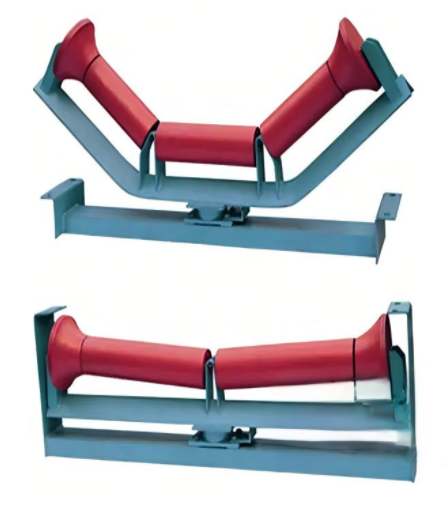
The efficiency of modern material handling heavily relies on the structural integrity and component selection of long distance transportation networks. In industrial environments ranging from mining and quarrying to bulk chemical processing, the movement of raw materials requires a robust mechanism capable of supporting heavy loads while maintaining high speeds. Central to this mechanism is the conveyor system, where the interaction between the moving belt and its support structure determines the overall productivity and longevity of the operation. Among the various components, the conveyor idler roller stands as a fundamental element, providing the necessary rotational support and shape to the belt as it traverses complex industrial landscapes.
Troughing Idlers in Belt Conveyor Systems are specialized sets of conveyor idler roller units arranged in a frame to shape the conveyor belt into a trough, significantly increasing the carrying capacity of the system and preventing material spillage during transit. These components are essential for centering the load and ensuring that the conveyor belt roller operates under optimal tension and alignment across various inclines and distances.
Understanding the technical specifications and mechanical advantages of these idler sets is crucial for engineers and plant managers looking to optimize their material flow. The transition from flat belt surfaces to troughed configurations marked a significant evolution in bulk handling technology. By utilizing a high quality conveyor idler roller, operators can minimize friction and power consumption while maximizing the volume of material moved per hour. This introduction serves to explore the foundational role of troughing idlers and sets the stage for a detailed analysis of their design, benefits, and diverse applications in the global industrial sector.
Table of Contents
What Are Troughing Idlers
Main Advantages of Troughing Idlers
Common Types of Troughing Idlers
Technical Specifications and Comparison
Installation and Maintenance Best Practices
Future Trends in Idler Technology
What Are Troughing Idlers
A troughing idler is a mechanical assembly consisting of three or more conveyor idler roller units mounted in a specialized steel frame. The central conveyor idler roller is positioned horizontally, while the wing rollers are set at specific angles, typically 20, 35, or 45 degrees. This configuration forces the flexible conveyor belt roller surface to form a U or V shape, creating a deep pocket for bulk materials. This structural design is the industry standard for carrying the "troughed" side of the belt, which is the side that actually transports the load from the feeding point to the discharge point.
The construction of a conveyor idler roller involves a central shaft, high precision bearings, multi stage seals, and a durable outer shell. The shell of the conveyor idler roller is often made from high grade carbon steel or specialized polymers to withstand constant abrasion and impact. In a troughing set, the precision of the angle and the alignment of each conveyor idler roller are paramount. If a conveyor belt roller is not supported by accurately angled idlers, the belt may experience uneven wear, tracking issues, and increased resistance, leading to premature system failure.
The Role of the Frame in Idler Sets
The frame supporting the conveyor idler roller group is engineered to handle the static weight of the material and the dynamic forces generated by the belt movement. These frames are usually hot dip galvanized or powder coated to prevent corrosion in harsh environments. The relationship between the frame and the conveyor belt roller is symbiotic; the frame provides the geometry, while the rollers provide the low friction interface. High performance conveyor idler roller designs incorporate labyrinth seals to protect internal bearings from dust and moisture, which is vital for maintaining the rotation of the conveyor belt roller over thousands of operational hours.
Main Advantages of Troughing Idlers
The primary benefit of utilizing a troughed conveyor idler roller configuration is the massive increase in cross sectional area for material transport. Compared to a flat belt, a troughed conveyor belt roller can carry up to 250% more material. This efficiency allows facilities to use narrower belts and smaller structures to move the same volume of product, leading to significant capital expenditure savings. Furthermore, the deep trough created by the conveyor idler roller naturally centers the load, which stabilizes the conveyor belt roller and reduces the risk of side spilling, especially when handling granular or fluid like bulk solids.
Another critical advantage lies in the reduction of mechanical stress. A well designed conveyor idler roller minimizes the rolling resistance of the conveyor belt roller. When the friction between the conveyor belt roller and the idlers is kept to a minimum, the power requirements for the drive motors are reduced. This energy efficiency is a key performance indicator for large scale mining operations where conveyors may stretch for several kilometers. The use of a precision conveyor idler roller also extends the life of the belt itself by preventing localized stretching and heat buildup that occurs with poor quality support components.
| Feature | Flat Idler System | Troughing Idler System |
| Load Capacity | Limited to surface width | High due to volumetric shape |
| Spillage Risk | High at edges | Low due to centered pocket |
| Belt Tracking | Difficult to maintain | Natural centering effect |
| Equipment Width | Requires wider belts | Optimized for narrow belts |
| Power Efficiency | Lower | Higher with precision rollers |
Enhanced Belt Longevity
The structural support provided by a conveyor idler roller ensures that the conveyor belt roller maintains its shape even under extreme load conditions. By distributing the weight across three rollers instead of one flat surface, the pressure on the belt carcass is minimized. This distribution prevents the "sag" between idler sets, which is a major cause of energy loss and belt wear. Investing in a high grade conveyor idler roller ensures that the transition areas of the conveyor are smooth, reducing the mechanical fatigue on the conveyor belt roller over time.
Common Types of Troughing Idlers
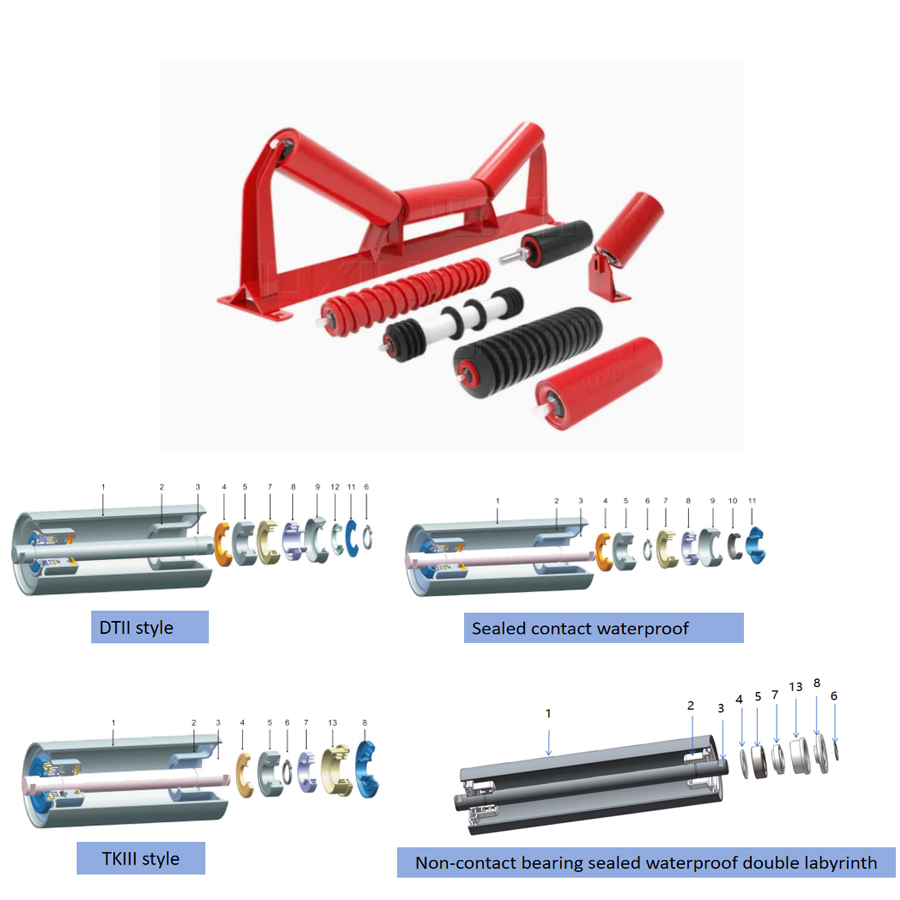
Industrial applications vary significantly, necessitating different designs for the conveyor idler roller assembly. The most common is the standard three roll troughing idler, used for general bulk handling. However, specialized versions exist to solve specific operational challenges. For instance, impact troughing idlers are installed at loading zones. These feature a conveyor idler roller equipped with rubber rings or cushions to absorb the kinetic energy of falling material, protecting the conveyor belt roller from punctures and heavy impact damage.
Another essential variation is the self aligning or training troughing idler. This unit is designed to pivot when it detects that the conveyor belt roller is drifting off center. The movement of the conveyor idler roller frame guides the belt back to the correct path, preventing edge damage and structural interference. In environments where material buildup is a concern, such as in coal or clay handling, disc type or "cleaner" conveyor idler roller units are used to shed sticky debris from the conveyor belt roller surface, ensuring consistent contact and rotation.
Material Specific Idler Variations
Offset Troughing Idlers: Used in low profile applications where the height of the conveyor idler roller set must be minimized.
Variable Angle Idlers: Allow operators to adjust the troughing angle to accommodate different material types on the same conveyor belt roller.
Garland Idlers: These consist of a conveyor idler roller chain linked together, providing flexibility in high speed or high impact heavy duty mining sectors.
Transition Idlers: Positioned near the head and tail pulleys to gradually change the conveyor belt roller from a flat to a troughed shape, preventing stress at the belt edges.
The selection of the correct conveyor idler roller depends on the belt width, the bulk density of the material, and the environmental conditions. For example, stainless steel or plastic conveyor idler roller shells are preferred in chemical or fertilizer plants to resist corrosion, while heavy wall steel rollers are the standard for rock and ore transportation.
Technical Specifications and Comparison
When evaluating a conveyor idler roller, several technical parameters must be considered to ensure compatibility with the conveyor belt roller. These include the diameter of the roller, the bearing size, and the shaft thickness. Industry standards like CEMA (Conveyor Equipment Manufacturers Association) or DIN provide classifications for idlers based on their load carrying capacity and service life. A CEMA C conveyor idler roller might be sufficient for light aggregate, whereas a CEMA E or F grade is required for heavy duty mining where the conveyor belt roller is subjected to massive tonnage.
| Parameter | Standard Duty | Heavy Duty |
| Roller Diameter | 89mm to 127mm | 152mm to 219mm |
| Shaft Material | Cold drawn steel | High strength alloy steel |
| Bearing Type | Deep groove ball | Tapered roller or heavy ball |
| Trough Angles | 20 / 35 degrees | 35 / 45 degrees |
| Typical Application | Grain, light sand | Iron ore, copper, coal |
The efficiency of the conveyor belt roller is also influenced by the "runout" or eccentricity of the conveyor idler roller. Low runout rollers reduce vibration and noise, which is particularly important in high speed systems. Furthermore, the sealing system of the conveyor idler roller determines its resistance to the environment. Multi labyrinth seals filled with high quality grease prevent the ingress of contaminants, ensuring the conveyor belt roller continues to move smoothly without increased drag from seized bearings.
Installation and Maintenance Best Practices
Proper installation of the conveyor idler roller sets is the first step in ensuring a long service life for the conveyor belt roller. Frames must be perfectly square to the conveyor stringers and leveled. Any misalignment in the conveyor idler roller assembly will cause the belt to mistrack, leading to significant operational downtime. During the initial setup, the spacing between troughing sets must be calculated based on the belt tension and load to prevent excessive belt sag, which increases the rolling resistance of the conveyor belt roller.
Maintenance of the conveyor idler roller should be proactive rather than reactive. Regular inspections should focus on identifying seized rollers, unusual noise, or excessive vibration. A seized conveyor idler roller acts like a brake, creating friction that can quickly wear through the bottom cover of the conveyor belt roller or even start a fire in flammable environments. Modern systems often use acoustic or thermal sensors to monitor the health of each conveyor idler roller in real time, allowing for planned replacements during scheduled outages.
Maintenance Checklist
Check for material buildup on the conveyor idler roller shells.
Inspect conveyor belt roller edges for signs of mistracking.
Listen for bearing failures or grinding sounds from the idler sets.
Verify that all conveyor idler roller units rotate freely by hand during shutdowns.
Ensure the mounting bolts of the idler frames are tight and secure.
Future Trends in Idler Technology
The industrial sector is moving toward "smart" conveyor components. The integration of IoT sensors within the conveyor idler roller allows for predictive maintenance, where the roller itself communicates its temperature and vibration data to a central control system. This innovation reduces the manual labor required to inspect miles of conveyor belt roller infrastructure. Additionally, there is a growing trend toward using composite materials for the conveyor idler roller shell. These materials are lighter, corrosion resistant, and produce less noise than traditional steel, making them ideal for environmentally sensitive areas.
Energy efficiency also remains a primary driver for new conveyor idler roller designs. Manufacturers are developing ultra low resistance bearings and specialized seal geometries that further reduce the drag on the conveyor belt roller. As global industries strive for carbon neutrality, optimizing the mechanical efficiency of the conveyor idler roller becomes a vital part of reducing the overall energy footprint of bulk material handling systems.
In conclusion, the troughing idler is much more than a simple support structure; it is a precision engineered component that dictates the efficiency, safety, and reliability of the entire belt conveyor. By selecting the appropriate conveyor idler roller and maintaining the conveyor belt roller with care, operators can achieve maximum throughput and minimize the total cost of ownership for their material handling infrastructure. Through constant innovation in materials and monitoring technology, the humble conveyor idler roller continues to play a central role in the advancement of industrial logistics.


