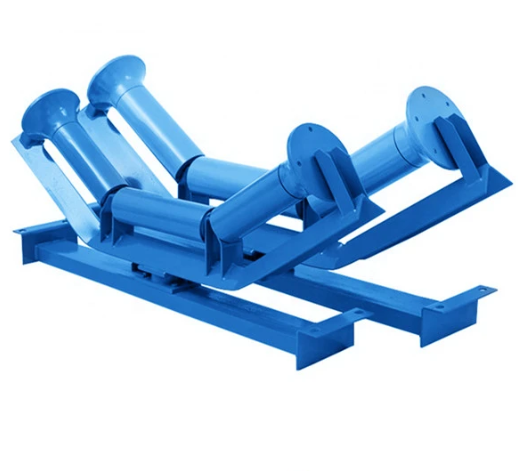
The efficiency and reliability of modern material handling systems depend heavily on the engineering precision of individual components. Among these, the conveyor idler roller stands as a critical element that provides structural support to the belt and the transported load. Proper design ensures that the system operates with minimal friction, reduced energy consumption, and extended belt life. In industrial environments ranging from mining to food processing, the mechanical integrity of these rollers dictates the overall uptime of the entire production line.
Belt conveyor idler roller design involves a comprehensive engineering approach that integrates material selection, bearing protection, shaft rigidity, and environmental sealing to ensure low rotational resistance and high load-bearing capacity under continuous operation. By focusing on high-quality manufacturing standards and precise geometric tolerances, engineers can significantly reduce the total cost of ownership for conveyor systems.
Understanding the nuances of conveyor idler roller construction allows facility managers and engineers to select the most appropriate configurations for their specific applications. This guide explores the technical specifications and design considerations necessary to optimize performance. From selecting the right diameter to ensuring regulatory compliance, each factor plays a vital role in the longevity of the conveyor belt roller.
Table of Contents
Type of Conveyor Roller
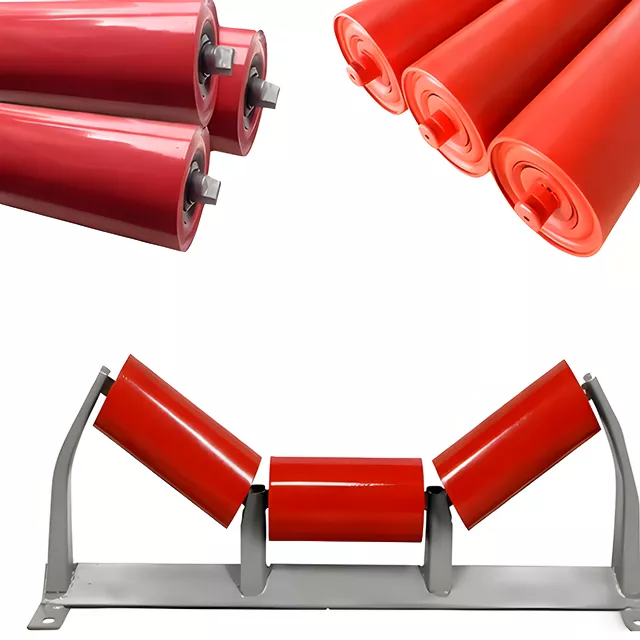
In professional material handling, the classification of a conveyor idler roller is typically determined by its function within the belt circuit. Carrying rollers are positioned on the troughing side to support the weight of the material. These are often arranged in sets of three or five to create a deep trough that prevents spillage. The design of each conveyor belt roller in these sets must account for the specific trough angle, which commonly ranges from 20 to 45 degrees depending on the material's flow characteristics.
Return rollers support the empty belt on its journey back to the loading point. Since they carry less weight, these are usually single horizontal units. However, specialized versions like V-return rollers or disc-style return rollers are employed to assist with belt tracking and to shed sticky materials. The conveyor idler roller used for return paths must be designed to prevent material buildup, which can lead to belt misalignment and premature wear.
Other specialized types include training rollers, which pivot to correct belt drift, and screw rollers that help clean the belt surface. Every conveyor belt roller type serves a distinct purpose in maintaining system equilibrium. Selecting the correct type of conveyor idler roller ensures that the mechanical stress is distributed evenly across the belt width, preventing edge damage and localized stretching.
Conveyor Roller Diameter
The diameter of a conveyor idler roller is a fundamental design parameter that influences the rotational speed and the bearing life. Standard diameters usually range from 89mm to 219号mm. A larger diameter conveyor belt roller rotates at a lower RPM for a given belt speed compared to a smaller one. This reduction in rotational speed decreases the wear on the internal bearings and lowers the peripheral speed of the roller shell, leading to a quieter operation and longer service life for the conveyor idler roller.
When determining the optimal diameter, engineers must consider the belt width and the density of the material being moved. For heavy duty applications like iron ore mining, a larger conveyor belt roller diameter is preferred to handle the high radial loads. Conversely, for light packaging or assembly lines, a smaller conveyor idler roller might be sufficient and more cost-effective.
| Application Type | Recommended Diameter (mm) | Typical Belt Speed (m/s) |
| Light Duty | 89 - 108 | 0.5 - 2.0 |
| Medium Duty | 114 - 133 | 2.0 - 3.5 |
| Heavy Duty | 152 - 219 | 3.5 - 6.0 |
Choosing an oversized conveyor belt roller can provide a safety margin for future capacity increases, while an undersized conveyor idler roller may fail prematurely due to excessive heat generation in the bearings.
Conveyor Roller Length
The length of the conveyor idler roller must be precisely matched to the belt width and the frame configuration. In a troughing set, the center roller and the wing rollers often have the same length, though some custom designs vary this to optimize the load cross-section. The overall length of the conveyor belt roller shell must be slightly wider than the belt to ensure full support even during minor tracking fluctuations.
If the conveyor idler roller is too short, the belt edges may lack support, causing sagging and increased power consumption. If it is excessively long, it adds unnecessary weight and cost to the system. Precision in measuring the distance between the mounting brackets is essential to ensure the conveyor belt roller fits securely within the idler frame. Standardized lengths help in maintaining interchangeability across different sections of the conveyor.
Conveyor Roller Material
The choice of shell material for a conveyor idler roller significantly impacts its durability and weight. Carbon steel is the most common material due to its high strength and cost-effectiveness. However, in corrosive environments, stainless steel or galvanized steel is preferred. A high-performance conveyor belt roller might also utilize HDPE (High-Density Polyethylene) or composite materials. These non-metallic options offer excellent resistance to chemical attack and reduced noise levels.
Composite conveyor idler roller shells are also beneficial because they have a lower mass, which reduces the "start-up" inertia of the conveyor system. This leads to energy savings over time. Furthermore, the smooth surface of a plastic conveyor belt roller helps prevent material adhesion. In the table below, we compare the primary materials used in conveyor idler roller manufacturing.
| Material | Durability | Corrosion Resistance | Weight |
| Carbon Steel | High | Low | Heavy |
| Stainless Steel | High | Very High | Heavy |
| HDPE / Composite | Medium | Excellent | Light |
| Aluminum | Medium | High | Light |
Selecting the right material for the conveyor belt roller shell ensures that the unit can withstand the abrasive nature of the cargo while resisting the external elements.
Conveyor Roller Bearings
At the heart of every conveyor idler roller is the bearing assembly. Deep groove ball bearings are the industry standard because they can handle both radial and axial loads efficiently. The precision grade of the bearing (such as C3 or C4 clearance) is chosen based on the expected thermal expansion and operating speed. A well-designed conveyor belt roller incorporates a robust sealing system to protect these bearings from dust, moisture, and contaminants.
Triple labyrinth seals are widely regarded as the most effective protection for a conveyor idler roller. These seals create a tortuous path that prevents particulates from reaching the lubricant. High-quality grease is used to ensure smooth rotation and to dissipate heat. If the bearings in a conveyor belt roller fail, the roller may seize, causing friction that can wear through the conveyor belt or even pose a fire risk in underground applications.
Roller Shaft Design
The shaft of a conveyor idler roller must be rigid enough to resist bending under the weight of the load. Shafts are typically made from cold-drawn round steel, ensuring high dimensional accuracy. The ends of the shaft are machined to fit into the idler frame slots, often featuring "flats" or "hex" shapes to prevent the shaft from rotating within the bracket.
A critical aspect of conveyor belt roller shaft design is the deflection limit. Excessive deflection can cause misalignment within the bearing race, leading to rapid failure. Engineers calculate the shaft diameter based on the maximum load and the span between the supports. For a heavy-duty conveyor idler roller, the shaft may be stepped, with a larger diameter in the center to provide maximum stiffness where the bending moment is highest.
Conveyor Roller Surface
The exterior surface of a conveyor idler roller can be modified to suit specific operational needs. While a smooth steel surface is standard, many applications require specialized coatings. For example, rubber lagging is often applied to a conveyor belt roller to increase friction and improve belt tracking. In cases where the material is highly abrasive, ceramic lagging may be used to provide superior wear resistance.
Rubber disc rollers are another variation where the conveyor idler roller surface consists of individual discs. This design is particularly effective for return rollers because the gaps between the discs allow material to fall through rather than building up on the roller surface. A clean conveyor belt roller surface ensures consistent contact with the belt and prevents the "bumping" effect that can occur with uneven material buildup.
Impact Resistance
Loading zones are the most demanding areas for any conveyor idler roller. When heavy materials are dropped onto the belt from a height, the resulting impact forces can damage both the belt and the supporting rollers. To mitigate this, impact rollers are used. An impact conveyor belt roller features thick rubber rings or cushions around the steel shell to absorb the kinetic energy of the falling material.
The design of an impact conveyor idler roller requires a reinforced internal structure to prevent the shaft and bearings from being crushed. By installing these specialized conveyor belt roller units at transfer points, operators can significantly extend the life of the conveyor belt, which is often the most expensive component of the system. The shock-absorbing properties of the impact conveyor idler roller also help in reducing the noise levels in the loading area.
Environmental Considerations
Operating conditions play a massive role in the performance of a conveyor idler roller. In extreme temperatures, the lubricants and seal materials must be rated for the specific thermal range. For example, a conveyor belt roller operating in a sub-zero arctic environment requires low-temperature grease to prevent the bearings from seizing. Conversely, in high-temperature applications like foundry sand handling, heat-resistant seals are mandatory.
Moisture and humidity are also significant threats to a conveyor idler roller. Without proper galvanized or painted finishes, the shell can rust, leading to a rough surface that abrades the belt. In marine or coastal environments, the salt air can quickly degrade a standard conveyor belt roller. Therefore, specifying a corrosion-resistant conveyor idler roller is essential for long-term reliability in outdoor or chemically aggressive settings.
Regulatory Compliance
Designing a conveyor idler roller is not just about mechanical performance; it also involves adhering to international safety and quality standards. Organizations like CEMA (Conveyor Equipment Manufacturers Association) provide guidelines for roller ratings and dimensions. Following these standards ensures that a conveyor belt roller from one manufacturer can be replaced by a unit from another without compatibility issues.
Safety regulations often dictate the use of fire-resistant and anti-static materials for a conveyor idler roller used in underground mining or grain handling, where explosive dust may be present. Compliance with these standards ensures that the conveyor belt roller does not become an ignition source. Furthermore, noise emission standards are becoming increasingly strict, pushing the design of the conveyor idler roller toward quieter, more balanced rotations to protect worker health.
Conclusion
The design of a conveyor idler roller is a sophisticated balance of mechanical engineering and material science. Every component, from the shell diameter to the intricate labyrinth seals, must be carefully selected to meet the demands of the application. A high-quality conveyor belt roller reduces friction, protects the belt, and minimizes maintenance requirements, ultimately leading to a more profitable operation.
By prioritizing factors such as impact resistance, environmental protection, and shaft rigidity, engineers can create a conveyor idler roller that thrives even in the harshest conditions. As the industry moves toward more automated and energy-efficient systems, the role of the precision-engineered conveyor belt roller will only become more critical. Investing in superior conveyor idler roller design is an investment in the longevity and efficiency of the entire material handling infrastructure.


