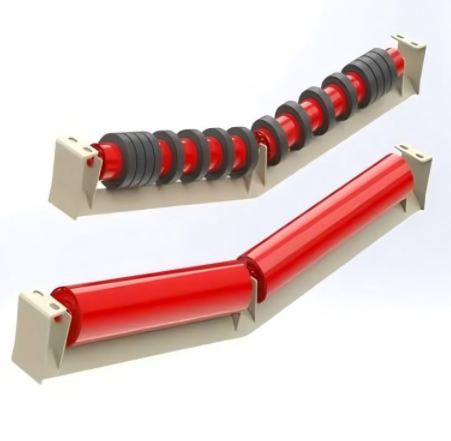
The efficiency of a modern warehouse or manufacturing facility relies heavily on the integration of automated material handling systems. Choosing the right equipment is a critical decision that impacts throughput, energy consumption, and long term operational costs. Among the most common solutions are belt conveyors and live roller conveyors. While both systems are designed to move goods from point A to point B, they utilize different mechanical principles and components, such as the conveyor idler roller and the conveyor belt roller, to achieve these goals. Understanding the technical nuances between these two systems is essential for any facility manager or engineer looking to optimize their logistics flow.
The primary difference between a belt conveyor and a live roller conveyor lies in the driving surface and the method of contact with the load. A belt conveyor uses a continuous loop of fabric or rubber pulled over a metal bed or a series of rollers to transport items, making it ideal for small, irregular, or loose parts. In contrast, a live roller conveyor utilizes a series of powered rollers to move flat bottomed loads like boxes or pallets, allowing for easy accumulation and diversion without stopping the entire line. Both systems rely on a high quality conveyor idler roller to maintain structural integrity and minimize friction during heavy duty cycles.
As industries move toward smarter automation and AI driven logistics, the selection of the correct conveyor idler roller or conveyor belt roller becomes a matter of precision engineering. The following sections will provide an in depth technical comparison of these two powerhouses of material handling. We will explore their internal mechanisms, typical applications, and the specific scenarios where one outperforms the other. By analyzing the role of the conveyor idler roller in load distribution and the conveyor belt roller in tension management, this guide aims to provide a comprehensive framework for your next equipment investment.
What is Live Roller Conveyor?
A live roller conveyor, often referred to as a powered roller conveyor, is a sophisticated material handling system where the rollers themselves are driven to move the product. Unlike gravity rollers, these systems use motors connected via belts, chains, or O rings to provide consistent movement. The heart of this system is the conveyor idler roller, which provides the necessary support for the load while ensuring smooth rotation. Each conveyor idler roller is engineered to handle specific weight capacities, and the spacing between them determines the minimum size of the products that can be transported.
In a live roller setup, the conveyor belt roller might be used as a primary drive component or as a snubber roller to maintain tension on the driving belt underneath the rollers. These systems are highly modular. For instance, Chain Driven Live Roller (CDLR) conveyors are used for heavy pallets, where each conveyor idler roller is linked to the next by a sprocket and chain. On the other hand, Belt Driven Live Roller (BDLR) systems use a flat belt that runs beneath the rollers, pressing against them to create friction and movement.
One of the most significant advantages of this technology is the ability to create "zones." By using internal motors within a conveyor idler roller (known as motorized drive rollers or MDR), facilities can achieve zero pressure accumulation. This means the conveyor idler roller in one zone can stop if the zone ahead is full, preventing products from colliding. The precision of the conveyor idler roller and the conveyor belt roller in these systems ensures that even fragile items are handled with care. Furthermore, the durability of a stainless steel or galvanized conveyor idler roller makes it suitable for diverse industrial environments.
Technical Components of Live Roller Systems
| Component | Function | Material Importance |
| conveyor idler roller | Supports the load and provides the rolling surface. | High grade steel or aluminum for durability. |
| conveyor belt roller | Acts as a drive or tensioning element in BDLR systems. | Must have high friction coating for grip. |
| Drive Shaft | Transfers power from the motor to the rollers. | Precision aligned to prevent vibration. |
| Bearings | Found inside every conveyor idler roller to ensure low friction. | Sealed bearings prevent dust contamination. |
What is Belt Conveyor?
A belt conveyor is perhaps the most universally recognized type of conveyor. It consists of two or more pulleys (or drums) with a continuous loop of carrying medium—the conveyor belt—that rotates about them. To support the weight of the belt and the load it carries, a series of conveyor idler roller units are placed at specific intervals along the frame. These conveyor idler roller sets prevent the belt from sagging, which would otherwise increase the energy required to drive the system. The conveyor belt roller at the head and tail of the system is responsible for providing the motive force and maintaining the tracking of the belt.
The versatility of the belt conveyor comes from the belt material itself. Whether it is PVC, rubber, or modular plastic, the belt provides a solid, stable surface. This makes the system perfect for transporting items that would fall between the gaps of a conveyor idler roller in a roller conveyor. The conveyor belt roller used in these systems is often crowned to help the belt stay centered. Without a properly aligned conveyor belt roller, the belt could drift, causing edge damage and material spillage.
In high speed or long distance applications, the quality of the conveyor idler roller is paramount. A high performance conveyor idler roller reduces the "indentation rolling resistance" that occurs when the belt deforms over the roller. By optimizing the diameter and bearing quality of the conveyor idler roller, manufacturers can significantly reduce power consumption. Additionally, the conveyor belt roller must be regularly inspected for wear, as any buildup of debris on a conveyor belt roller can lead to belt mistracking and premature failure of the conveyor idler roller bearings.
Belt Conveyor Structural Features
Slider Bed vs. Roller Bed: In a slider bed, the belt slides over a smooth metal sheet. In a roller bed, the belt is supported by a conveyor idler roller array, which is much more efficient for heavy loads.
The Drive Pulley: This is a specialized conveyor belt roller that is connected to the motor. It is often lagged with rubber to increase traction.
The Return Side: On the underside of the conveyor, the conveyor idler roller supports the empty belt as it returns to the start of the circuit.
Impact Cradles: In loading zones, a heavy duty conveyor idler roller or impact bar is used to absorb the energy of falling materials, protecting the conveyor belt roller and the belt.
When to Use Live Roller Conveyor
Determining when to implement a live roller system often comes down to the need for product manipulation. Because the conveyor idler roller units can be controlled independently or in small groups, these conveyors are the gold standard for accumulation. If your process requires items to wait in a queue without the motor running against a stalled belt, the live roller conveyor is the answer. The conveyor idler roller allows for "slippage" or independent stopping which is impossible on a standard belt system.
Another key use case is when products need to be moved laterally. It is much easier to push a box off a series of conveyor idler roller units than it is to slide it across a moving belt. Furthermore, the conveyor belt roller in a BDLR system allows for easy integration of pop up transfers and diversions. If your facility requires sorting products into different lanes, the gaps between each conveyor idler roller provide the perfect space for mechanical arms or lift gates to operate.
Moreover, live roller conveyors are preferred for heavy duty pallet handling. A reinforced conveyor idler roller can support thousands of pounds, and when driven by a chain, it provides the torque necessary to move massive loads. In these heavy environments, the conveyor belt roller is less common, as chains offer a more positive drive. However, in lighter packaging lines, the conveyor belt roller is essential for maintaining the tension of the driving belt that turns every conveyor idler roller.
Advantages of Live Roller Systems
Accumulation: Minimal back pressure prevents product damage.
Modularity: Easy to replace a single conveyor idler roller without dismantling the whole line.
Cleanliness: Less surface area contact than a belt, which can be important in certain "clean" manufacturing steps.
Durability: A steel conveyor idler roller resists heat and chemical exposure better than many fabric belts.
Tension Control: Using a precision conveyor belt roller to adjust the drive belt ensures consistent speeds across long distances.
When To Use Belt Conveyor
The belt conveyor is the champion of versatility, especially when dealing with varied shapes and sizes. If you are transporting small parts, bags, or items with irregular bottoms, a conveyor idler roller based system would fail as the items would get stuck. The solid surface provided by the belt, supported by an underlying conveyor idler roller, ensures that every item stays on the path. For inclines and declines, the belt conveyor is also superior. By using a "rough top" belt or cleats, and ensuring the conveyor belt roller provides enough tension, products can be moved up steep angles that a conveyor idler roller could never manage.
High speed transport is another area where the belt conveyor shines. Because the belt is a single continuous surface, it can run at much higher feet per minute (FPM) than a conveyor idler roller system, which might suffer from vibration or noise at extreme speeds. The conveyor belt roller at the end of the line is designed to handle these high RPMs, and the return conveyor idler roller ensures the belt remains stable throughout its flight.
In the food and pharmaceutical industries, belt conveyors are often mandated. A modular plastic belt can be easily sanitized, and it lacks the many small crevices found in a conveyor idler roller assembly. Even in these environments, a specialized conveyor idler roller with food grade bearings is used to support the belt. The conveyor belt roller in these setups is usually made of stainless steel to prevent corrosion from cleaning chemicals. Whether you are moving bulk grain or delicate electronics, the combination of a strong belt, a reliable conveyor belt roller, and a sturdy conveyor idler roller provides the most stable transport platform available.
Belt Conveyor Selection Criteria
| Factor | Belt Conveyor Performance | Role of Components |
| Incline/Decline | Excellent (up to 30 degrees) | conveyor belt roller must provide high torque. |
| Small Items | Best choice; no gaps. | conveyor idler roller provides flat support. |
| Speed | Very High | Requires precision balanced conveyor idler roller. |
| Product Stability | High stability for fragile items. | conveyor belt roller ensures smooth starts/stops. |
Get It Right
Selecting between these two systems requires a deep dive into your specific operational needs. If your priority is sorting, merging, and accumulation, the live roller conveyor with its independent conveyor idler roller control is likely your best bet. However, if you are moving bulk materials, small parts, or need to change elevations, the belt conveyor—supported by a high quality conveyor idler roller and driven by a robust conveyor belt roller—is the industry standard.
The longevity of your system depends heavily on the quality of the components you choose. A cheap conveyor idler roller might save money upfront but will lead to increased maintenance and downtime due to bearing failure. Similarly, an incorrectly specified conveyor belt roller can cause the belt to stretch or snap, halting production entirely. It is vital to source your conveyor idler roller and conveyor belt roller from manufacturers who adhere to strict ISO standards and use premium materials.
As we look toward the future of material handling, the integration of sensors into the conveyor idler roller is becoming more common. These smart rollers can detect heat, vibration, and speed changes, alerting maintenance teams before a failure occurs. Whether you choose a belt or a roller system, ensuring that your conveyor idler roller and conveyor belt roller are part of a proactive maintenance strategy will maximize your return on investment.
Final Comparison Summary
Use Live Roller for: Boxes, pallets, accumulation zones, and complex sorting where each conveyor idler roller needs to be part of a logic gate.
Use Belt for: Loose items, small parts, inclines, high speeds, and any application requiring a continuous surface supported by a conveyor idler roller.
Maintenance Tip: Regularly check the alignment of your conveyor belt roller to prevent belt wear and ensure each conveyor idler roller is spinning freely to reduce motor strain.
Environmental Factors: For dusty environments, use a sealed conveyor idler roller. For wet environments, choose a stainless steel conveyor belt roller.
In conclusion, the decision between a belt conveyor and a live roller conveyor is not about which system is "better," but which is better suited for the task at hand. By focusing on the mechanical advantages of the conveyor idler roller in distributing weight and the efficiency of the conveyor belt roller in providing drive, you can build a system that is both reliable and cost effective. Always consult with a technical expert to ensure the spacing of your conveyor idler roller and the diameter of your conveyor belt roller match your specific throughput requirements. This technical diligence ensures that your facility remains at the cutting edge of industrial efficiency, utilizing the best that conveyor idler roller and conveyor belt roller technology has to offer.


