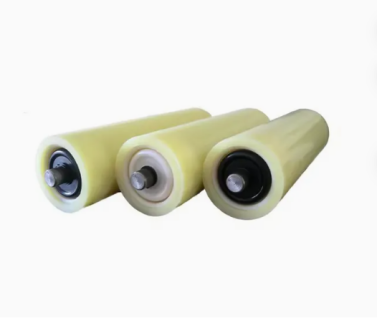
Premature equipment failure disrupts production lines and halts operations unexpectedly. Often, these massive system shutdowns trace back to improperly specified components. Applying basic, off-the-shelf rollers to complex systems routinely leads to bearing blowouts, tread delamination, and persistent belt tracking issues. Relying solely on outer dimensions is no longer sufficient for modern conveyor systems.
We must establish a precise engineering specification. Properly designed Polyurethane Idlers ensure long lifecycles and facilitate highly accurate vendor quoting. By addressing load distribution, environmental exposure, and precise alignment tolerances, you can prevent catastrophic failures. This guide will walk you through the exact technical parameters required to specify these critical components successfully. You will learn how to match materials to operational realities and eliminate the guesswork from your procurement process.
Key Takeaways
Specification requires matching polyurethane durometer to exact load and speed requirements to prevent hysteresis (internal heat buildup).
Distinguishing idlers from drive wheels changes the specification focus from traction to rolling resistance and core bonding.
Bearing press-fit tolerances and core material selection are as critical as the urethane formulation itself.
Clear documentation of environmental factors (chemicals, temperature) prevents premature material degradation.
Defining the Application: Polyurethane Idlers vs. Drive Rollers
Engineers frequently confuse the functional requirements of idlers with those of drive rollers. This simple misunderstanding leads to rapid component failure. We must first establish a clear functional distinction. Polyurethane Idlers primarily guide, tension, and support heavy loads. They operate passively. Unlike drive wheels, they do not transmit torque. They also do not require high-friction traction to move belts or materials.
This functional difference dictates a major specification shift. When specifying drive rollers, engineers prioritize grip. They often select softer materials and incorporate aggressive tread patterns. However, applying these same priorities to an idler roller creates massive inefficiencies. For idlers, you must shift your focus entirely. Priorities must move toward achieving low rolling resistance. You also need excellent vibration dampening and sustained load-bearing capabilities.
Consider the failure framing of applying drive-wheel specifications to passive applications. When you specify an overly soft durometer for an idler to increase grip, you inadvertently increase rolling resistance. The soft urethane continuously compresses and rebounds under the load. This constant deformation acts like driving a car on under-inflated tires. It causes unnecessary drag on the conveyor motor. More importantly, this continuous flexing generates extreme internal heat. The material will quickly degrade, leading to rapid wear and sudden blowout. By understanding this distinction, you can specify harder, more resilient compounds.
Core Technical Specifications to Define
A reliable request for quotation (RFQ) demands strict adherence to core technical parameters. Vague dimensions result in inconsistent product performance. You must define four critical areas to ensure vendor accuracy.
Durometer (Hardness)
Durometer measures the hardness of the polyurethane. It serves as the primary framework for balancing load capacity against impact absorption. You will generally choose between two scales: Shore A and Shore D.
The Shore A scale measures softer materials. These compounds excel at impact absorption. They grip well and run quietly. However, they deform easily under heavy weights. The Shore D scale measures much harder compounds. Shore D urethanes offer high load capacities and very low rolling resistance. They act almost like rigid plastics. You must select a durometer based strictly on your required load per roller. Overloading a Shore A compound guarantees failure.
Dimensional Tolerances
Basic tape-measure dimensions invite disaster. You must provide the required precision for the Outside Diameter (OD), Inside Diameter (ID), and overall Width. Specify your tolerances clearly. A tolerance of ±0.005 inches performs entirely differently than ±0.030 inches. Tight OD tolerances ensure smooth load transfers across multiple rollers.
Total Indicator Reading (TIR)
TIR measures the eccentricity or runout of the roller. Establishing acceptable runout limits prevents severe vibration, especially at high rotational speeds (RPMs). A roller with high TIR wobbles. This wobble destroys bearings prematurely. For high-speed applications, mandate a TIR of 0.005 inches or less. This guarantees concentric rotation and extends bearing life.
Core Material & Bonding
The urethane must bond perfectly to a rigid core. Selecting the right core material impacts the overall weight, inertia, and magnetic properties of your system. You must also specify the required surface preparation, such as grit blasting and chemical primers, to ensure permanent adhesion.
Core Material
Weight / Inertia
Load Capacity
Best Application Environment
Aluminum
Low
Moderate
High-speed systems requiring fast starts and stops.
Steel
High
Maximum
Heavy industrial loads, magnetic tracking applications.
Weight-restricted machinery, chemical exposure zones.
Operating Environment and Material Constraints
The physical environment surrounding your equipment heavily influences urethane performance. Neglecting environmental factors during the specification phase routinely causes premature material degradation. You must document these constraints meticulously.
Dynamic Heat Buildup (Hysteresis)
Hysteresis represents the greatest threat to Polyurethane Idlers. As a roller turns under heavy load, the material compresses at the contact point and expands as it rotates away. This continuous mechanical flexing generates internal heat. Polyurethane acts as an insulator, trapping this heat inside the core. If you do not calculate your load and speed (RPM) correctly, this heat buildup causes internal melting. The urethane will literally liquefy from the inside out, leading to explosive failure. You must share exact speeds and loads with your manufacturer to formulate a low-hysteresis compound.
Chemical and Contaminant Exposure
Polyurethane generally resists many chemicals, but it is not invincible. You must specify the exact chemical exposure your rollers will face.
Oils and Greases: Common in automotive and machining applications. Require specific oil-resistant formulations.
Solvents: Harsh cleaning agents can swell or dissolve certain urethane blends.
Washdown Chemicals: Food and beverage facilities use caustic cleaners. These dictate specialized chemical resistance.
Abrasive Particulates: Sand, glass, or metal shavings act like sandpaper. High abrasion resistance becomes mandatory here.
Thermal Limitations
Identify your ambient operating temperatures immediately. Polyurethane softens in extreme heat and becomes brittle in freezing conditions. Furthermore, you must factor in the coefficient of thermal expansion (CTE). Polyurethane expands faster than its metal core when heated. In extreme temperature swings, this differential expansion breaks the chemical bond. It causes the tread to slide completely off the core.
Hydrolysis Risk
Water destroys certain types of polyurethane. If your application involves high humidity, direct water spray, or submerged conditions, you face hydrolysis risk. Hydrolysis breaks down the chemical chains in the urethane, turning it to mush. You must specify ether-based polyurethane formulations for wet environments. Keep ester-based formulations strictly for dry, oil-heavy applications.
Bearing Integration and Shaft Alignment
A roller only performs as well as its bearing. How you integrate the bearing and align the shaft dictates the lifespan of the entire assembly.
Bearing Fit Methods
You generally choose between two integration methods: press-fit bearings and molded-in bearings. Press-fit bearings require precision machining of the core. The main advantage is replaceability. When the bearing fails, you can press it out and install a new one, saving the urethane assembly. Molded-in bearings involve pouring the liquid urethane directly around the bearing outer race. This method provides the highest possible precision and eliminates the risk of bearing spin. However, it renders the bearing non-replaceable. Once the bearing dies, you must replace the entire unit.
Bearing Selection
Selecting the correct bearing shield or seal depends entirely on the contaminant environment documented earlier. Specify sealed bearings (often designated as RS or 2RS) for harsh environments. Seals make physical contact with the inner race, blocking water, chemicals, and fine dust. They do create slight rotational drag. Specify shielded bearings (ZZ) for cleaner, high-speed environments. Shields block large debris but do not seal against liquids. They offer much lower friction.
Alignment Tolerances
Vertical and horizontal shaft misalignment severely impacts your rollers. When a shaft sits slightly skewed, the belt does not track across the center of the idler. Instead, it pushes heavily against one edge. This edge-wear quickly tears chunks of urethane away. You must specify strict alignment tolerances for your maintenance teams. Additionally, you can specify crowned profiles. A crowned roller has a slightly larger diameter in the center than at the edges. This geometry naturally pulls belts back to the center, compensating for minor tracking issues.
Sourcing Strategy: Standard Stock vs. Custom Profiles
Your procurement strategy dictates both your lead times and your upfront costs. Balancing standard inventory against custom geometry requires careful planning.
Standard Availability
Whenever possible, leverage off-the-shelf sizes. Standard sizes minimize lead times drastically. Manufacturers typically stock common dimensions, allowing them to cast parts rapidly. Using standard sizes also avoids expensive tooling costs. If your application can accommodate a standard OD and width, you save substantial money on initial mold fees.
Custom Geometries
Sometimes, standard flat rollers cannot solve complex guiding problems. You must provide clear justifications for specifying custom profiles. For instance, V-guide rollers feature a deep central groove designed to track specific belts and prevent lateral wandering. Flanged idlers provide hard mechanical stops to keep materials on track. Concave contours excel at wire-guiding or handling delicate tubing. While custom profiles require dedicated tooling, they often solve chronic system failures that standard rollers cannot address.
Prototyping & Scalability
Committing immediately to a high-volume production run with an untested specification is dangerous. Follow recommended steps for prototyping to mitigate risk.
Analyze Current Failures: Document exactly how your existing rollers fail (e.g., melting, chunking, bearing seizure).
Order Low-Volume Prototypes: Request a small batch of 5 to 10 units utilizing different durometers.
Conduct Field Testing: Install the prototypes in your most demanding application zones. Monitor them for heat buildup and edge wear over 30 days.
Finalize the Mold: Once you confirm the correct durometer and geometry, authorize the manufacturer to cut a high-cavity production mold for scale.
Conclusion
Specifying an idler requires precision, not guesswork. A complete and actionable RFQ must clearly define dimensional tolerances, exact durometer requirements, core material choices, and bearing integration methods. Furthermore, you must explicitly document all environmental constraints, including chemical exposure and ambient temperatures. Skipping any of these baseline requirements invites premature failure.
Do not navigate this process in isolation. We strongly recommend collaborating closely with your polyurethane manufacturer’s engineering team. They possess the chemical expertise to formulate specific compounds that resist hysteresis and hydrolysis in your exact environment.
Your next step is immediate action. Audit your production floor today. Identify any idler rollers suffering from rapid wear, delamination, or excessive noise. Gather the failed components, measure the available envelope, and submit a technical drawing or a worn sample for professional evaluation.
FAQ
Q: What is the difference between a polyurethane roller and a wheel?
A: The distinction relies entirely on the aspect ratio. Rollers typically feature a wider face relative to their overall outside diameter. They are designed to support broad loads or wide belts. Wheels possess a narrow face relative to a larger diameter. However, both components can function passively as idlers depending on the machinery design.
Q: How do I choose the right durometer for a polyurethane idler?
A: Your decision rule must evaluate load weight, required cushioning, and maximum acceptable rolling resistance. Heavy loads require harder materials (Shore D) to prevent deformation and reduce drag. Lighter loads or applications requiring delicate handling benefit from softer materials (Shore A) that offer superior shock absorption.
Q: Why is my urethane idler roller melting or cracking?
A: Melting or severe cracking almost always stems from hysteresis. This is excessive internal heat buildup. It occurs due to rapid, continuous flexing of the urethane. Causes include severe overloading, running the roller at excessive RPMs, or specifying a durometer that is too soft for the application weight.
Q: Can worn polyurethane idlers be recoated?
A: Yes. Recoating offers significant savings. If the internal metal core remains undamaged, manufacturers can strip away the old, degraded urethane. They then re-prep the metal surface and cast a new polyurethane tread onto the existing core. This eliminates the cost of machining new metal cores.