WeChat: +86-15343013980 Tel: +86-731-8310-0762 Fax: +86-731-8310-5992 WhatsApp: +8615343013980 Email: sales@hncgss.com Add: Hunan Province Liuyang City Environmental Protection Technology Demonstration Park
What Is The Difference between A Pipe Conveyor And A Belt Conveyor?
Plant managers, procurement engineers, and system designers constantly face a complex industrial dilemma. They must balance initial capital expenditure against long-term operational efficiency. They also navigate strict environmental compliance rules and tight site space constraints. Traditional open-troughed belts have served as the industry backbone for many decades. However, modern industrial sites demand smarter and cleaner material handling solutions.
Moving from a traditional open belt to an enclosed pipe system is not just a simple containment upgrade. It represents a fundamental shift in plant routing strategy and long-term infrastructure planning. In this article, you will learn the precise mechanical differences between these two systems. We will explore their unique spatial advantages, environmental benefits, and operational cost dynamics. By the end, you will possess a clear framework. This will help you decide which conveyor technology best fits your specific project requirements.
Key Takeaways
Design: Traditional belts lie flat or troughed; pipe conveyors are mechanically curled into a closed tube by a hexagonal idler roller group.
Space & Routing: Pipe systems can negotiate tight 3D curves (horizontal and vertical) and steeper inclines (up to 27°), eliminating the need for space-consuming transfer stations.
Environmental Control: A closed pipe conveyor belt prevents material spillage and dust emissions, eliminating the need for external dust suppression systems.
Cost Dynamics: Traditional belts offer lower upfront costs, while pipe conveyors deliver lower TCO on complex routes through reduced infrastructure, zero material loss, and minimized cleanup.
Core Mechanical and Structural Differences
Form Factor and The Idler Group
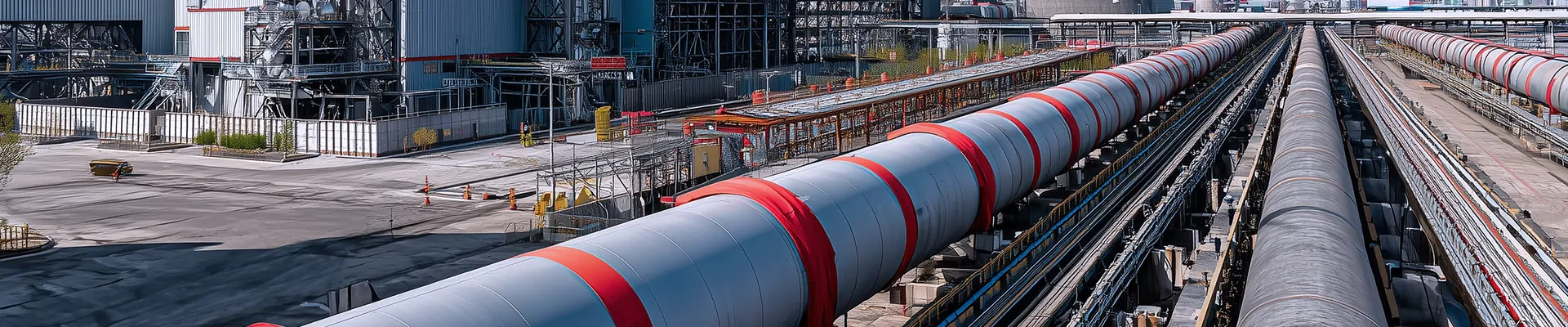
Traditional flat or troughed configurations rely on a simple structure. They typically use three rollers arranged in a shallow trough. Gravity holds the material in the center. This works perfectly for straight, uncomplicated transport. Pipe conveyors operate on a completely different mechanical principle. They utilize six rollers arranged in a precise hexagon. These idler stations physically force the belt to roll up. They overlap the edges of a specially designed Pipe Conveyor Belt to form a sealed, secure tube.
Belt Construction: The Engineering Core
The belt itself serves as the engineering core of the system. Standard belting primarily handles linear tension. It only needs enough flexibility to curve into a shallow trough. Conversely, a pipe belt demands highly specific transverse stiffness. It must hold its circular shape continuously without collapsing inward. Yet, it must remain flexible enough longitudinally to negotiate complex curves.
Engineers achieve this through advanced internal construction. They distribute internal wire ropes very strategically. They place denser cords near the center of the belt. This lowers the overall center of gravity. A lower center of gravity effectively prevents the tube from rotating or twisting as it travels across long distances.
The Return Strand Mechanism
Traditional belts return flat along the bottom of the structure. They expose their "dirty" carrying side directly to the return idlers. This exposure causes material buildup, requiring constant scraper maintenance. Pipe systems behave differently. They remain enclosed on the return trip. Many modern systems utilize a "dirty side in" curl for the return strand. The contaminated surface folds inward upon itself. This drastically reduces idler fouling and minimizes routine cleaning labor.
Route Flexibility and Spatial Constraints
Overcoming 2D Limitations
Traditional belts face severe two-dimensional limitations. You must run them in relatively straight lines. If you need a horizontal curve, it requires a massive radius. Changing direction sharply means you must build expensive transfer towers. These towers consume space, require additional motors, and create new material drop points.
3D Routing Capabilities
Pipe conveyors easily break these routing rules. They seamlessly handle simultaneous horizontal and vertical curves. You can weave them over existing buildings, under roads, and around obstacles. Industry benchmarks show impressive capabilities. They can achieve turning radii up to 300 times the pipe diameter. Furthermore, they can navigate horizontal bending angles up to 90 degrees. You eliminate the need for intermediate transfer stations entirely.
Incline and Footprint Advantages
The enclosed cross-section provides another major spatial advantage. It increases the material contact area significantly. The material presses against the walls of the tube. This grip allows for much steeper inclines. You can push vertical angles up to 27°. That represents roughly a 50% increase over traditional troughed limits.
Additionally, you save premium land space. The required supporting infrastructure shrinks dramatically. The structural width can be 50% to 70% narrower than an equivalent troughed belt setup.
Comparison of Spatial Features
Feature
Traditional Troughed Belt
Pipe Conveyor System
Horizontal Curving
Limited to very large radii
Tight curves, up to 90° bends
Maximum Incline Angle
Typically 15° to 18°
Up to 27° (high friction grip)
Transfer Towers
Required for sharp direction changes
Eliminated on complex routes
Structure Width
Standard wide footprint
50% to 70% narrower footprint
Material Containment and Environmental Compliance
The Spillage and Dust Paradigm
Traditional belts remain highly vulnerable to environmental factors. High wind shear often blows fine dust off the top layer. High-speed running causes material bounce and spillage along the edges. Rain and snow introduce moisture, which degrades sensitive products. These vulnerabilities create significant compliance headaches for plant managers near residential zones.
Zero-Spillage Enclosure
You can frame the pipe conveyor as a built-in compliance tool. It seals the payload completely from the outside world. This makes it ideal for hazardous, dusty, or high-value materials. Cement, coal, fertilizers, and raw chemicals travel securely. You experience zero product loss during transit. The surrounding environment remains completely protected from fugitive dust and soil contamination.
Ancillary Equipment Reduction
Because the belt acts as its own protective housing, you realize secondary benefits. Plant owners can often bypass expensive external installations. You do not need massive external dust collectors at multiple drop points. You can skip installing complex water spray suppression systems. You also eliminate the need for heavy, protective steel conveyor galleries. The system inherently protects itself.
Capital Expenditure and Operational Efficiency
Initial Capital Expenditure (Capex)
We must acknowledge the initial financial realities transparently. Pipe conveyors cost noticeably more upfront per meter. The complex six-roller idler stations require precision manufacturing. The heavily engineered belt carries a premium price tag. You are investing in advanced structural mechanics. Therefore, short, simple routes usually favor traditional systems from a strict Capex perspective.
Operational Expenditure (Opex) and ROI
However, you recoup these initial costs rapidly on complex routes. The financial return mechanisms are powerful. First, you eliminate transfer towers. This cuts structural steel and concrete foundation costs drastically. Second, you remove multiple drive motors at those transfer points. Third, you see drastic reductions in housekeeping labor. Nobody has to shovel spilled material under the conveyor line every week.
Energy Consumption Realities
Let us clarify a common industry myth regarding power draw. The enclosed shape does cause higher friction per meter. Six rollers touch the belt instead of three. Yet, overall system energy consumption often balances out on long runs. Sometimes it even drops. You eliminate the intense friction found at material drop points. You remove wind resistance entirely. By running a single continuous motor system instead of four separate ones, you optimize electrical efficiency.
Implementation Realities and Engineering Risks
Balancing Belt Stiffness
Designing the system involves critical engineering challenges. Balancing belt stiffness remains the primary hurdle. If a Pipe Conveyor Belt is too stiff, power consumption spikes. The motors must fight the rubber to keep it folded. If the belt is too soft, it risks collapsing completely. A soft belt might also twist dangerously within the hexagonal idlers during tight curves.
Maintenance Complexity
You trade cleanup labor for mechanical maintenance. General housekeeping decreases, but mechanical complexity increases. You must manage twice as many idlers per meter compared to standard systems. Alignment requires high precision. A single misaligned idler station can cause the entire tube to rotate out of position.
Material Limitations
Pipe systems also have specific payload limitations. They are highly sensitive to oversized lumps. A massive chunk of ore can physically jam the closed tube. Furthermore, heat accumulation poses a distinct risk. Enclosed environments trap material heat effectively. If you transport hot cement clinker, standard rubber will degrade rapidly. You must specify specialized EPDM belting. These advanced materials can safely handle continuous temperatures up to 180°C.
Decision Framework: Which Conveyor is Right for Your Project?
Choosing the right technology requires evaluating your specific site conditions. Use the following guidelines to inform your procurement strategy.
When to Choose Traditional Belt Conveyors
Straight Runs: You have uninterrupted, high-capacity routes over flat, open terrain.
Budget Limits: You operate under strictly limited initial capital budgets.
Chunky Materials: You handle highly abrasive, excessively large, or unpredictable lump sizes where enclosure poses jamming risks.
Low Compliance Pressure: The material is non-hazardous, and dust generation does not violate local environmental regulations.
When to Choose a Pipe Conveyor System
Complex Routing: You need obstacle avoidance, tight curves, and steep elevation changes. You lack room for intermediate transfer stations.
Environmental Sensitivity: You transport dusty or hazardous materials near residential zones or strictly regulated ecological areas.
Long-Term Efficiency: You prioritize long-term material recovery. Reduced maintenance downtime and zero spillage outweigh the initial procurement premium.
Space Constraints: You must fit the conveyor into an extremely narrow operational corridor.
Conclusion
The choice between these two systems is rarely a simple one-to-one replacement. It represents a highly strategic infrastructure decision. Traditional belts win consistently on sheer volume-to-upfront-cost ratios for simple, straight routes. Conversely, pipe conveyors offer a high-tech, space-saving solution. They guarantee regulatory compliance across complex industrial topographies. They protect your material, your workers, and the surrounding environment simultaneously.
Before finalizing your procurement documents, take concrete action. Conduct a localized site audit to map your spatial constraints. Commission a finite element analysis (FEA) of your proposed route to verify belt stiffness requirements. Finally, execute a comprehensive lifecycle cost assessment with a qualified engineering partner. This ensures you select the system that truly optimizes your long-term operational success.
FAQ
Q: Does a pipe conveyor belt consume more power than a traditional belt?
A: Per meter, pipe belts have higher rolling resistance due to 6-point idler contact. However, on long or complex routes, they often use less total energy by eliminating intermediate transfer stations and material drop-point friction.
Q: Can an existing traditional conveyor be retrofitted into a pipe conveyor?
A: Generally, no. The structural framework, drive tensioning, and the belt itself are fundamentally different. A full system replacement is required, though existing routing paths can often be reused and simplified.
Q: What is the typical lifespan of a pipe conveyor belt?
A: Lifespan depends on material abrasiveness and proper stiffness balancing. Modern belts utilizing Low Rolling Resistance (LRR) rubber and advanced steel cord placement often match or exceed the operational lifecycles of premium traditional belts.