WeChat: +86-15343013980 Tel: +86-731-8310-0762 Fax: +86-731-8310-5992 WhatsApp: +8615343013980 Email: sales@hncgss.com Add: Hunan Province Liuyang City Environmental Protection Technology Demonstration Park
What Causes Conveyor Belt Misalignment?
Conveyor belt misalignment, commonly known as mistracking, is rarely a localized issue. Instead, it serves as a systemic symptom indicating imbalanced tension, structural wear, or environmental interference. When your belt wanders off its intended path, it signals underlying physical imbalances that require immediate attention.
Relying on constant manual adjustments or quick "band-aid" fixes accelerates belt edge wear significantly. These reactive habits increase motor fatigue, strain structural components, and cause excessive material spillage across your facility. Over time, you degrade the entire conveyor system and compromise daily operational safety.
Resolving misalignment requires moving away from reactive fixes toward a strict, root-cause diagnostic framework. You must systematically rule out structural imbalances and hidden component failures first. Ultimately, utilizing engineered interventions like a Friction Self-aligning Idler Set helps maintain dynamic center-line tracking effectively, ensuring continuous production without constant human intervention.
Key Takeaways
Belt skew is driven by physics: belts will naturally drift toward the side with the lowest tension or least friction.
Accurate diagnosis requires a systemic approach, starting from material build-up and frame squareness, down to hidden thermal variances.
Never use the primary drive pulley to correct tracking; this risks catastrophic drive system failure.
For persistent, dynamic misalignment, upgrading to a Friction Self-aligning Idler Set provides active, edge-safe mechanical correction without the drawbacks of static guide rollers.
The True Cost and Visible Symptoms of Belt Skew
Identifying misalignment early prevents catastrophic equipment failure. Belt skew rarely happens overnight. It announces itself through clear physical and auditory distress signals. You must train maintenance teams to recognize these warnings before minor drift becomes a major system breakdown.
Visual & Auditory Red Flags
When a belt drifts from the center-line, it immediately interacts with structural components not designed for rubber contact. You will notice several undeniable symptoms:
Fraying at the belt edges: The rubber cover slowly shaves off, exposing the inner fabric carcass.
Continuous squealing or friction noise: The belt aggressively rubs against the conveyor frame or chute walls.
Varying belt speeds: Uneven tension causes the drive motor to struggle, leading to visible surging.
Material carryback and spillage: Off-center belts dump valuable material along the walkway, creating severe safety hazards.
The Domino Effect on Maintenance
A simple two-inch drift might seem harmless initially. However, it exponentially degrades system health. When the belt rides unevenly, it places asymmetrical stress on the splice. Splice integrity degrades rapidly under uneven tension, risking a complete belt tear. Furthermore, the heavy-duty brackets supporting your idlers experience unnatural lateral forces. They will bend, crack, and fail prematurely.
Operational ROI
You must stop framing alignment as a tedious maintenance chore. Proper tracking acts as a direct driver of facility uptime. A perfectly aligned belt requires less motor amperage to pull, boosting energy efficiency. By keeping the belt centered, you extend its operational lifespan. This maximizes your capital investment and protects your bottom-line profitability.
Structural & Mechanical Root Causes (The 4-Step Diagnostic SOP)
Effective troubleshooting demands discipline. You cannot fix tracking issues by randomly adjusting tensioners. Use this field-tested, four-step standard operating procedure to isolate front-line mechanical faults accurately.
Step 1: Debris and Build-up Check. Inspect all rollers, pulleys, and the belt surface thoroughly. Fugitive material often packs tightly onto pulleys. This build-up artificially changes the pulley diameter. The belt will always wander toward the side with the larger diameter. Clean the system before making any mechanical adjustments.
Step 2: Frame Squareness and Leveling. A frame that is not square simply cannot be tracked. Use the diagonal measurement method. Measure the distance from one corner to the opposite diagonal corner across the frame structure. Compare it against the other diagonal. If the numbers differ, the frame is warped. Never rely on eyeballing this measurement.
Step 3: Seized or Out-of-Round Rollers. A seized roller acts exactly like a brake pad. It generates immense friction heat and alters local tension zones. The belt will drag and pull toward the seized component. We recommend using thermal imaging cameras during normal operation. A seized bearing glows white-hot on the screen, allowing instant diagnosis.
Step 4: Pulley Alignment Rules. This is a hard safety and compliance rule. Never adjust the drive pulley for tracking purposes. Moving the primary drive risks catastrophic drive system failure and misaligns the gearbox. You must only use snub rollers and idlers to influence the belt path.
Advanced and Overlooked Causes of Misalignment
When basic structural checks fail to resolve the skew, you must look deeper. Complex operational environments introduce nuanced physical forces. Understanding these advanced causes separates novice operators from seasoned experts.
Tension Zone Amplification
Conveyor belts do not possess uniform tension across their entire length. Near the head pulley, the belt enters a high-tension zone. Here, the rubber becomes rigid and unforgiving. Minor structural misalignments in this zone are aggressively amplified. Conversely, low-tension zones near the tail allow the belt more flexibility to absorb minor tracking errors.
Reversing Belts (Push-Pull Dynamics)
Bi-directional conveyors introduce complex physics. When a belt runs forward, the drive pulley pulls the belt, keeping it stable. When you reverse the system, the drive pulley pushes the belt. The tension zone flips entirely. Pushing a flexible object inherently creates instability. A belt perfectly tracked in one direction may severely skew the moment it reverses.
Environmental & Thermal Variances
Do not underestimate the weather. Sunlight and wind alter belt physics drastically.
Sunlight Exposure: If morning sunlight hits only one side of an exterior belt, that side heats up. The rubber expands and becomes more flexible. The shaded side remains stiff. This uneven flexibility changes friction dynamics, causing the belt to walk off-center.
Heavy Crosswinds: Exterior overland conveyors act like giant sails. Strong crosswinds apply massive lateral pressure, physically pushing the unloaded belt off the idlers.
Belt Cupping & Splice Faults
Examine the belt profile. If the top cover thickness drastically exceeds the bottom cover thickness, problems arise. If this top-to-bottom ratio exceeds 3:1, chemical and thermal shrinkage occurs unevenly. The belt edges curl upward, creating a "cupped" shape. Cupping reduces surface contact with the idlers. You lose tracking control entirely.
Root Cause
Physical Mechanism
Expected Belt Behavior
Push-Pull Reversal
Tension zone flips from pulling to pushing.
Perfect alignment forward; severe drift in reverse.
Thermal Variance
Uneven rubber expansion due to sunlight/shade.
Gradual drift occurring specifically at certain times of day.
Belt Cupping
Cover thickness ratio exceeds 3:1; uneven shrinkage.
Edges curl upward; belt loses contact with center idlers.
High-Tension Zone Fault
Rigidity near head pulley prevents error absorption.
Rapid, aggressive skewing immediately before the discharge.
Stop Using "Band-Aid" Fixes: The Limits of Static Correction
Many facilities fall into the trap of using brute force to steer belts. They rely on outdated correction methods. These habits mask the symptoms while silently destroying your hardware.
The Problem with Over-Adjusting
Maintenance crews often chain multiple standard training frames together to force a misaligned belt straight. This is a critical mistake. Chaining frames creates competing tension zones. Furthermore, over-tensioning the gravity take-up to stop wandering creates severe problems. It stretches the internal carcass permanently. Once the fabric stretches beyond its elastic limit, the belt is ruined.
Static Edge Guides
Static vertical side rollers act as rigid barriers. They rigidly force a belt back to the center by blocking its path. However, conveyor belts are not designed to handle continuous lateral friction on their thin edges. The static guide grinds against the edge like a cheese grater. It damages the belt edge rapidly. Eventually, this constant rubbing destroys the splice entirely.
The Pivot to Active Correction
You must abandon static barriers. Establishing true reliability requires dynamic, load-responsive alignment solutions. You need hardware that senses the drift and gently steers the belt from beneath, rather than violently shoving it from the side.
Evaluating the Friction Self-aligning Idler Set
When basic structural repairs fall short, you must upgrade your hardware. Modern operations rely on dynamic tracking technology. Evaluating the right solution requires understanding how active correction physically interfaces with your belt.
What it is and How it Works
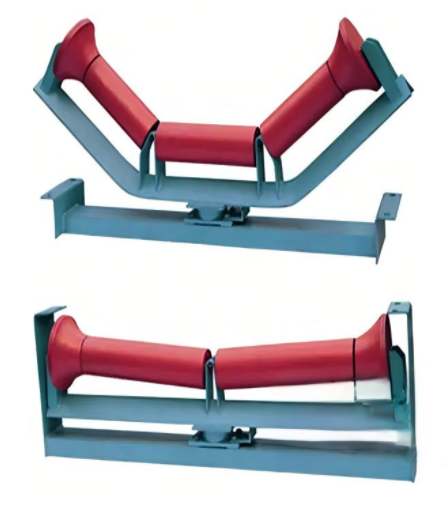
A Friction Self-aligning Idler Set is a dynamic, pivot-based mechanism designed to maintain center-line tracking automatically. It utilizes the natural friction of the wandering belt to sense drift. When the belt moves off-center, the asymmetric weight and friction trigger the central pivot. The mechanism automatically angles the idler rollers forward on the drifting side. This subtle geometric shift gently steers the belt back to the center line.
Evaluation Criteria vs. Alternatives
Consider the engineering differences between friction-based systems and outdated static guides.
Edge Safety: Unlike static vertical guides that chew up delicate belt edges, the friction mechanism leverages the tough bottom cover of the belt. It uses surface contact rather than edge impact to guide the path.
Responsiveness: A Friction Self-aligning Idler Set instantly reacts to temporary load shifts. If a rock crushes against the chute and causes off-center loading, the idler compensates immediately without requiring manual human intervention.
Feature
Static Edge Guides
Friction Self-aligning Idlers
Correction Method
Brute force lateral blocking.
Pivot-based gentle steering.
Belt Edge Damage
High (causes severe fraying).
None (uses bottom cover friction).
Response to Load Shifts
Static and unforgiving.
Dynamic and highly responsive.
Maintenance Needs
Frequent replacement due to wear.
Low-maintenance automated operation.
Implementation Realities & Best Practices
Placing your tracking hardware correctly determines its success. Improper placement neutralizes the benefits completely.
Where to Install: They are highly effective on the return side of the belt. Install them approximately 30 to 50 feet prior to the tail pulley. This ensures the belt enters the tail pulley perfectly centered, guaranteeing accurate center-loading at the hopper.
Where NOT to Install: Avoid placing them directly in peak-tension zones right behind the head pulley. In these locations, belt rigidity resists steering. The mechanism cannot overcome the massive localized tension.
Shortlisting Logic
Consider this upgrade immediately if your facility suffers from fluctuating load weights. If you run bi-directional conveying systems, specialized bi-directional friction idlers are mandatory. Furthermore, if you possess legacy conveyor frames with minor, unfixable structural warping, this active hardware overcomes those permanent imperfections effortlessly.
When to Retrofit vs. Replace (Next Steps)
You cannot solve every tracking issue with add-on hardware. Sometimes, the belt itself is fundamentally flawed. You must know when to stop troubleshooting and simply replace the damaged components.
The Threshold for Replacement
Watch for a specific rhythm. Does the belt constantly "hunt" for the center, wandering back and forth continuously? If this happens despite a perfectly square frame and properly installed dynamic idlers, look at the belt manufacturing. You likely face a permanent manufacturing defect known as camber (a physical curve cut into the belt). Alternatively, you have an unsquare splice. An improperly cut splice forces the belt to jerk sideways every time the joint passes over a pulley.
Actionable Next Step
Conduct a comprehensive system audit today. Start by running the conveyor entirely empty. Observe its baseline tracking path. Then, run it under maximum load. Note how the tension shifts. Isolate the exact root cause using the 4-step diagnostic SOP before you purchase replacement hardware. Precision diagnostics save capital.
Conclusion
Conveyor misalignment remains dictated strictly by the physical laws of tension and friction. You must discard outdated trial-and-error manual adjustments. They cost you valuable uptime and destroy your components.
Systematically rule out structural imbalances first. Clean the system of fugitive debris, verify your frame geometry, and inspect your rollers. Once the structure is sound, implement intelligent, load-responsive hardware like a Friction Self-aligning Idler Set. Upgrading to active correction guarantees long-term alignment, minimizes daily maintenance labor, and thoroughly protects your heavy industrial capital investments.
FAQ
Q: Why does my conveyor belt only track off to one side?
A: A belt tracking exclusively to one side typically indicates asymmetrical tension or friction. Check for an unsquare splice, severe off-center material loading at the chute, or seized idler rollers on that specific side. The belt always moves toward the point of least tension or highest friction.
Q: Can I use a Friction Self-aligning Idler Set on a reversing conveyor?
A: You cannot use standard unidirectional models. Reversing conveyors flip the tension dynamics entirely. You must specify and install bi-directional alignment idlers designed specifically to sense and pivot correctly regardless of the belt's travel direction.
Q: How long does a new belt take to track properly?
A: A new belt requires a controlled "break-in" period, typically spanning several days of operation. During this time, the internal fabric carcass stretches slightly, and initial tension equalizes. You must monitor and adjust the take-up systems closely during this initial phase.