WeChat: +86-15343013980 Tel: +86-731-8310-0762 Fax: +86-731-8310-5992 WhatsApp: +8615343013980 Email: sales@hncgss.com Add: Hunan Province Liuyang City Environmental Protection Technology Demonstration Park
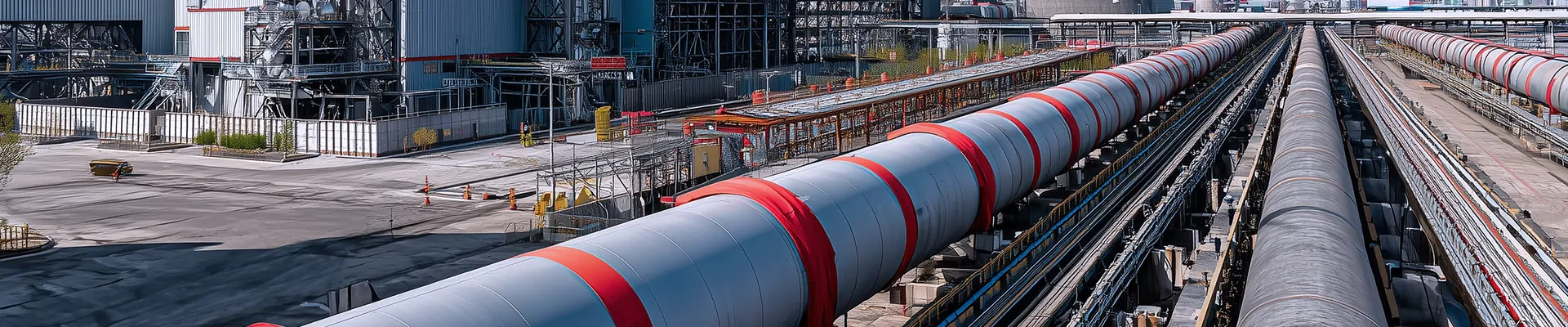
What Are The Different Types of Pipe Conveyors?
Heavy industrial operations handle hazardous, dusty, or high-value bulk materials daily. Traditional open troughed belts often fail environmental and efficiency standards in these demanding environments. Facility managers face strict footprint constraints across their plants. They also deal with complex routing issues and increasingly severe emission regulations. These pressures force a definitive shift away from standard open belts. They also make energy-heavy pneumatic systems less desirable for long-term operations.
Pipe conveyors solve these specific challenges by fully enclosing the material during transit. However, selecting the right system requires careful planning and deep operational insight. Facility leaders must understand the nuances of belt construction and core materials. Structural shapes also play a massive role in system longevity. Making the right choice ensures long-term reliability and prevents premature system failure. We will explore the primary types of these advanced conveying systems. You will learn exactly how to align structural designs, core reinforcements, and rubber compounds to your unique industrial requirements.
Key Takeaways
Pipe conveyor systems are primarily categorized by their structural shape (Round vs. Oval) and the internal reinforcement of the pipe conveyor belt (Fabric vs. Steel Cord).
Specialized rubber cover compounds dictate the system's operational environment, ranging from highly abrasive rock handling to high-heat or oil-exposed agricultural applications.
Successful implementation hinges on strict engineering tolerances, including maintaining a maximum 75% internal capacity rule and calculating precise transition lengths.
Compared to pneumatic systems, pipe conveyors can achieve the same volume transport with a fraction of the installed power requirement.
The Business Case: Why Transition to a Pipe Conveyor System?
Industrial plants must move massive volumes of bulk materials efficiently. Upgrading to an enclosed conveying system requires capital investment. Yet, the operational benefits quickly justify the initial engineering efforts. You gain substantial advantages across environmental compliance, facility layout, and power consumption.
Environmental and Material Protection
Complete enclosure serves as the primary advantage of this technology. The belt rolls into a sealed tube, trapping the payload inside. This design completely prevents dust emissions from escaping into the facility. It also protects sensitive materials from harsh weather conditions like rain or heavy winds. Furthermore, it eliminates costly spillage along the transport route. You save money by reducing cleanup labor and preventing material loss.
Topographical Flexibility
Modern industrial plants rarely have straight, unobstructed paths. Traditional belts require expensive transfer towers to change direction. Pipe conveyors bypass this problem entirely. They easily execute complex 3D profiles. The system can navigate simultaneous horizontal and vertical curves. This flexibility allows engineers to route the conveyor around existing buildings, roads, or natural obstacles. You eliminate the need for intermediary transfer points.
Steep Incline Capabilities
Standard trough belts struggle with steep angles. Material tends to roll backward if the incline is too high. An enclosed system securely grips the material. It handles incline angles up to 30 degrees. This is roughly 50 percent steeper than a standard trough belt can manage. Steeper inclines mean shorter overall conveyor lengths. You conserve valuable ground space and reduce structural footprint.
Energy Efficiency
Many plants rely on dense or dilute phase pneumatic systems to move dusty materials. These pneumatic setups use massive air compressors. They consume enormous amounts of electricity. Pipe conveyors offer massive power savings by comparison. They rely on efficient mechanical drives. In some large-scale cement applications, switching from a pneumatic pump to an enclosed belt reduces installation power by up to 90 percent. You achieve the exact same volume transport while slashing monthly utility bills.
Classifying Pipe Conveyors by Structural Shape
Engineers primarily classify these systems by their cross-sectional profile. The shape determines how the system interacts with wind, structural supports, and the idlers. You must choose between round and oval configurations based on your route layout.
Round Pipe Conveyors
The round design represents the standard configuration in the industry. The flat belt receives the material at the tail end. It then passes through a series of transition idlers. These idlers roll the belt into a perfect cylinder. A staggered hexagonal arrangement of idler rollers holds this shape closed across the entire route.
This shape is best for standard applications requiring minimal structural support. The symmetrical design distributes the internal load evenly. This symmetry results in lower wear on the bottom idlers. It provides a reliable, highly predictable lifespan for standard industrial routes.
Oval Pipe Conveyors
Oval configurations are specialized engineering solutions. They feature a flattened, elliptical cross-section rather than a perfect circle. The idler arrangement forces the belt into this wider, shorter profile.
This design is best for extremely long, straight transport distances. The flattened shape lowers the center of gravity. It provides superior wind resistance in highly exposed outdoor environments. The oval shape also creates smoother running characteristics. It reduces unwanted belt rotation over multi-kilometer stretches.
Comparison Chart: Round vs. Oval Designs
Feature
Round Pipe Conveyors
Oval Pipe Conveyors
Cross-Section
Perfect cylindrical tube
Flattened elliptical tube
Idler Wear
Symmetric, low wear on bottom idlers
Slightly higher load on bottom center idlers
Wind Resistance
Standard
Superior (due to lower physical profile)
Best Application
Complex 3D routes, standard facility setups
Exposed, multi-kilometer overland routes
Types of Pipe Conveyor Belts by Core Reinforcement
The hidden internal skeleton of the system determines its ultimate strength. The core reinforcement carries the entire tension of the system. Selecting the proper carcass for your Pipe Conveyor Belt dictates how far and how much material you can transport.
Fabric Core (Textile) Belts
Fabric belts utilize woven synthetic materials for the internal carcass. Manufacturers typically use nylon or polyester layers. These synthetic layers provide excellent flexibility. They keep the overall weight of the belt exceptionally low.
You should evaluate fabric belts for shorter center distances. They handle moderate capacities perfectly. Their high flexibility makes them ideal for complex routes featuring tighter bending radii. They can twist and turn through crowded facility layouts much easier than heavier alternatives.
Steel Cord Reinforced Belts
Heavy industrial demands require unyielding strength. Steel cord belts embed high-tensile steel cables directly within the rubber matrix. These steel cables prevent stretching under massive loads.
This reinforcement is mandatory for extreme heavy-duty applications. It supports massive long-distance overland conveying. You can transport material up to 10 kilometers without a single transfer point. They handle massive throughputs reaching up to 6,000 tons per hour. However, this immense strength comes with a rigid trade-off. A steel Pipe Conveyor Belt requires a significantly larger bending radius. Engineers often mandate a curve radius at least 600 times the pipe diameter to prevent structural damage.
Best Practices for Core Selection
Analyze the route distance: Always default to steel cord if the single-flight run exceeds a few kilometers.
Check facility curves: If you must navigate tight corners around existing silos, a fabric core might be your only physical option.
Calculate peak load: Design the core tension around your absolute maximum surge capacity, not just your average daily flow.
Specialized Rubber Compounds for the Pipe Conveyor Belt
The external rubber cover serves as the frontline defense. It directly contacts the raw material on the inside and the idler rollers on the outside. Using a standard rubber compound in a harsh environment guarantees rapid failure. You must match the chemistry of the cover to your specific payload.
Abrasive & Tearing Environments (CL / EC): Quarries and mines deal with sharp, heavy rocks. These specialized compounds resist deep cuts and aggressive gouging. They are engineered specifically for highly abrasive materials like mined ores and heavy aggregates.
Fire Retardant & Anti-Static (BS): Safety is paramount in explosive environments. This compound is absolutely non-negotiable for coal handling. Subterranean mining operations also require it. It prevents static buildup and stops flames from spreading along the conveyor path.
Oil & Fat Resistant (AG / OM): Standard rubber absorbs oils, swells up, and falls apart. This specialized compound is designed specifically to resist swelling or chemical degradation. Use it when transporting agricultural grains, plant oils, animal fats, or harsh urban solid waste.
Extreme Heat Resistant (CX / MX / TX): High temperatures melt standard belts instantly. These advanced variants are formulated to handle incredibly hot bulk materials. They easily transport clinker or hot foundry sand. The extreme TX variants are capable of handling temperature peaks up to 300°C without blistering.
Implementation Risks and Engineering Realities
Designing an enclosed conveying system requires precise mathematical modeling. You cannot simply install components and expect flawless operation. Minor miscalculations lead to severe operational failures. Facility managers must understand these engineering realities before installation.
The 75% Capacity Rule
Overfilling the belt guarantees disaster. Systems must be designed so the bulk material occupies no more than 75% of the closed pipe's internal cross-section. The remaining 25% empty space is critical. It allows the rubber edges to maintain a safe, tight overlap. If you exceed this capacity rule, the material forces the overlap open. The belt bursts open between the idlers, spilling tons of material onto the ground.
Transition Length Calculations
The belt must change shape twice during its journey. It starts flat at the tail pulley to receive material. It then transitions into a tube. At the head pulley, it transitions back to flat for discharging. The distance required to make this shape change is called the transition length.
This length is absolutely critical. Incorrect calculation based on the belt's modulus of elasticity leads to severe fatigue. If the distance is too short, the rubber stretches violently. This causes improper sealing in the tubular section and leads to premature tearing along the belt edges.
Bending Radius Constraints
The ability to navigate 3D curves is a major advantage. However, you cannot bend the system arbitrarily. Pushing tight curves beyond the structural limits of the chosen Pipe Conveyor Belt causes massive stress concentrations. The tension pulls the belt apart on the outside of the curve. This unseals the overlap entirely. In severe cases, the outward force of the rigid belt can cause structural damage to the steel gantry framework holding the idlers.
Common Mistakes to Avoid
Ignoring the bulk density variations of your material when calculating the 75% fill volume.
Failing to account for extreme winter temperatures, which can stiffen the rubber and alter the required transition lengths.
Using fabric belt bending calculations on a route that ultimately requires a steel cord upgrade.
Evaluation Framework: Shortlisting the Right System
You need a logical approach to finalize your equipment choices. Bypassing a structured evaluation often results in underperforming systems. Focus strictly on your physical environment and payload characteristics to guide your engineering decisions.
Assess Material Properties
Start by auditing the exact nature of the material you plan to move. Measure the maximum temperature of the material as it hits the belt. Evaluate its abrasiveness and edge sharpness. Determine its chemical composition, noting any oils, fats, or acidic moisture. These specific data points dictate exactly which rubber cover compound you must specify. A mismatch here guarantees rapid surface degradation.
Map the Route
Analyze your topographical obstacles thoroughly. Walk the intended path and map every required turn and elevation change. High numbers of complex 3D curves heavily favor flexible fabric belts. Conversely, if your layout features straight, multi-kilometer overland hauls, you must use steel cord reinforcement. For these long, highly exposed straightaways, an oval structural design often provides the best stability against heavy crosswinds.
Conclusion
Selecting a pipe conveyor system is not a one-size-fits-all process. The success of your bulk material handling depends entirely on precise customization. The final decision rests on successfully aligning the structural shape, the internal core material, and the chemical properties of the rubber compound with your specific operational reality.
Before requesting formal vendor quotes, take immediate action. Audit your exact material flow volume to ensure you respect the critical 75% capacity rule. Map the topographical constraints of your site to determine your required curves. Finally, consult an engineering specialist to calculate your baseline transition lengths and bending radii. Thorough upfront planning guarantees a reliable, dust-free conveying system that will serve your facility for decades.
FAQ
Q: What is the maximum distance a pipe conveyor can cover?
A: Modern steel cord-reinforced systems can cover center distances up to 10 kilometers without requiring intermediary transfer points. This makes them highly effective for long overland mining or industrial transport routes.
Q: Can a pipe conveyor belt transport material in both directions?
A: Yes, a distinct advantage of pipe conveyors is "return belt conveying." This allows the system to transport one type of material on the forward journey and a different material on the enclosed return path without cross-contamination.
Q: How does a pipe conveyor compare to a pneumatic conveyor in energy use?
A: Pipe conveyors generally consume significantly less energy. In heavy industrial scenarios like cement plants, replacing a pneumatic pump system with a pipe conveyor can reduce installed power requirements by up to 80-90% for the exact same tonnage.
Q: What causes a pipe conveyor belt to fail to close?
A: Closure failure is typically caused by improper transition length design. Forcing the belt through an incorrectly calculated bending radius also pulls the overlap apart. Additionally, overfilling the belt beyond the recommended 75% internal capacity forces the seal to burst open.