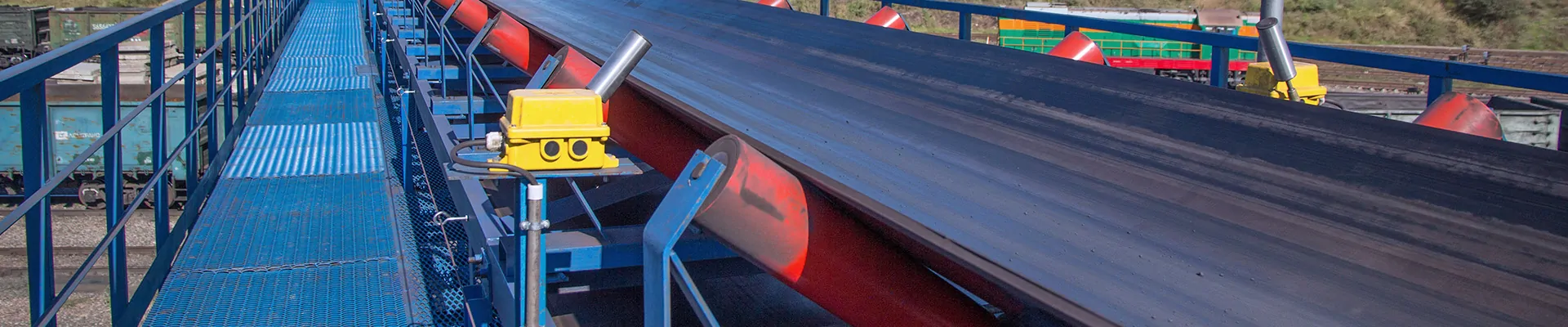
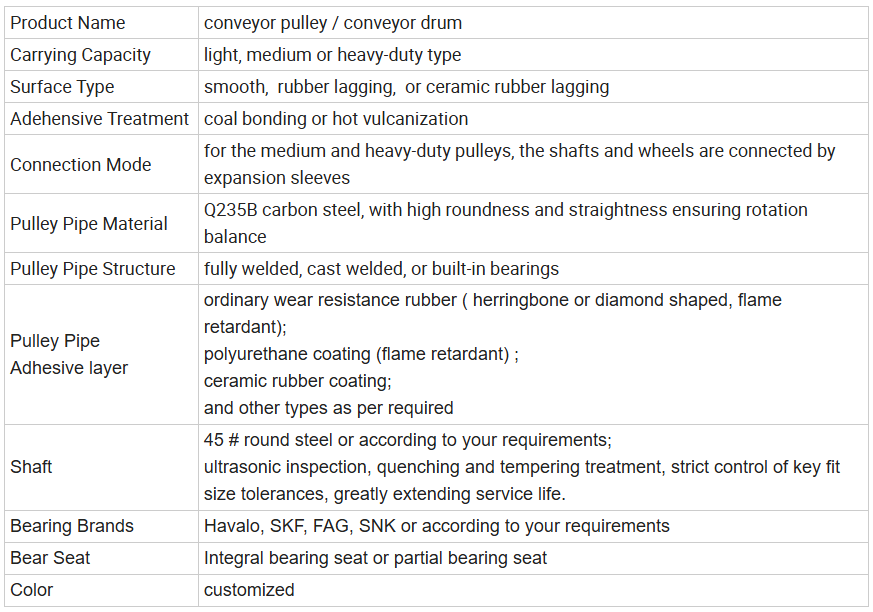
The Tail Pulley is located at the opposite end of the head pulley, where material is loaded onto the conveyor. Its main job is to redirect the return belt back to the head pulley, completing the belt's loop.
Location: End of the conveyor where material is loaded.
Main Job: Guides and turns the conveyor belt.
Key Feature: Often self-cleaning and can be part of the take-up system to maintain belt tension.
![]()
FAQ
1) What is a Tail Pulley in a belt conveyor system?
A Tail Pulley is the pulley installed at the opposite end of the head pulley, positioned at the loading end of the conveyor. Its role is essential for keeping the belt loop running correctly: it helps the belt travel smoothly through the loading zone and then continue its cycle back toward the drive end. In practical operation, a well-specified tail pulley supports steady belt circulation and helps the conveyor maintain a stable material-loading process.
2) Where is the Tail Pulley located?
The Tail Pulley is located at the end of the conveyor where material is loaded—meaning it sits in the area where the belt begins its loaded journey toward the head pulley. This placement matters because the loading zone typically sees more dust, spillage, and impact from falling material. By being positioned there, the tail pulley becomes a key component for guiding the belt through the loading section and ensuring the belt returns correctly on the return side.
3) What is the main job (function) of a Tail Pulley?
Its main job is to guide and turn the conveyor belt, specifically by redirecting the return belt back toward the head pulley, which completes the belt’s continuous loop. In other words, after material is discharged at the head end, the belt travels back empty (return run), and the tail pulley helps turn that return belt around so it can run forward again for the next loading cycle. This “loop completion” is the core function described on the product page.
4) How does the Tail Pulley “complete the belt loop”?
In a belt conveyor, the belt must circulate continuously: carry material forward, then return empty. The page highlights that the tail pulley’s role is to redirect the return belt back to the head pulley, forming a continuous loop. When the belt reaches the tail end on the return path, the tail pulley changes the belt direction so it can travel forward again under the loading zone—keeping the system running in a stable, repeatable cycle.